
As an Amazon Associate I earn from qualifying purchases. This post may contain affiliate links.

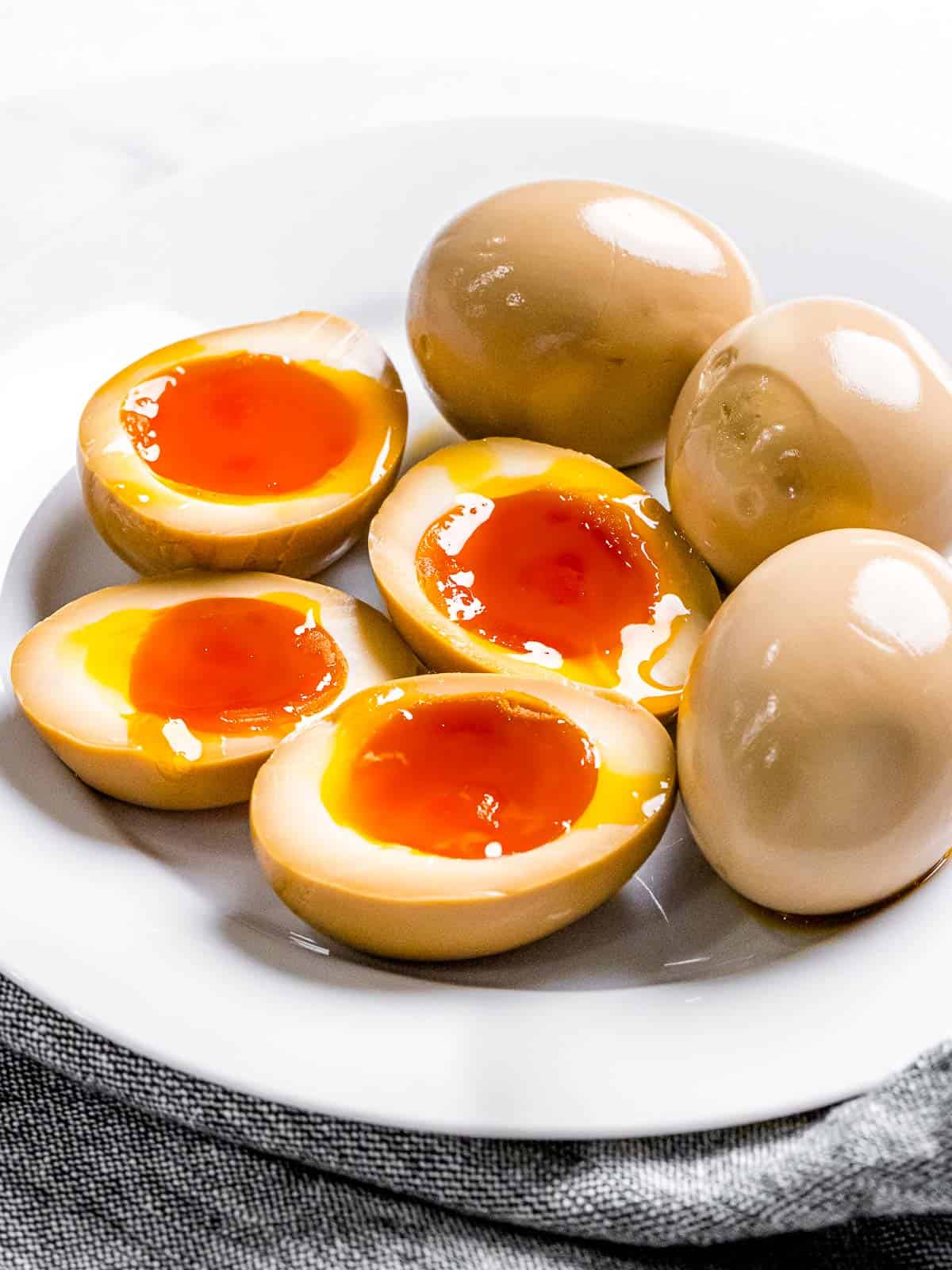
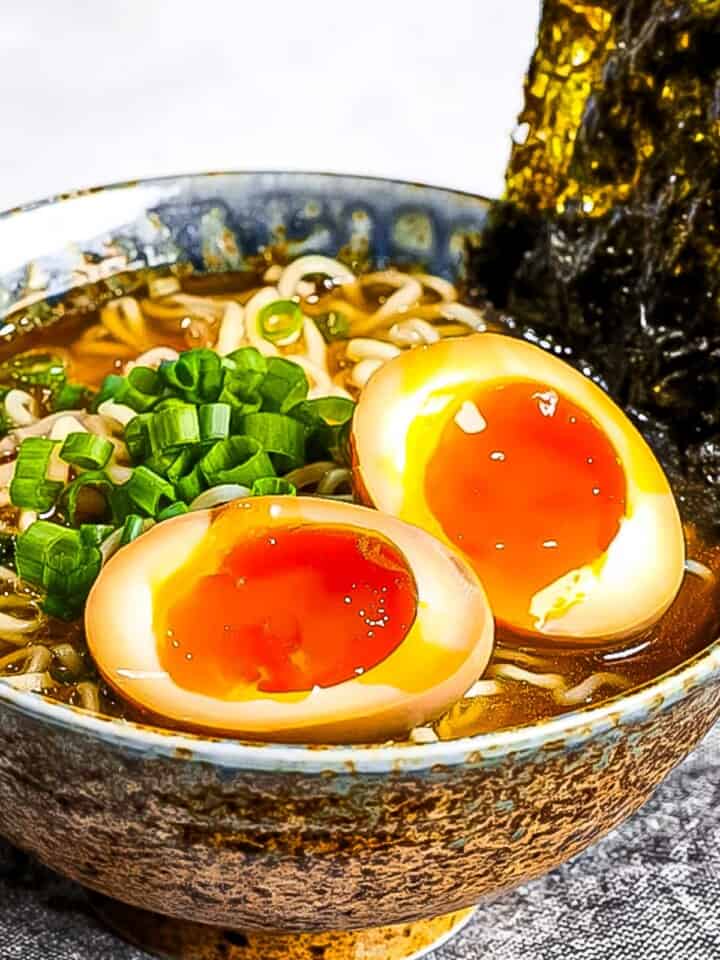
Ramen eggs are soy sauce marinated eggs that are soft boiled for a runny, jammy yolk. They’re also called shoyu eggs, soy sauce eggs, or soy marinated eggs. In Japan they’re called ajitama or ajitsuke tamago (味付け玉子) and are often served atop a bowl of ramen.
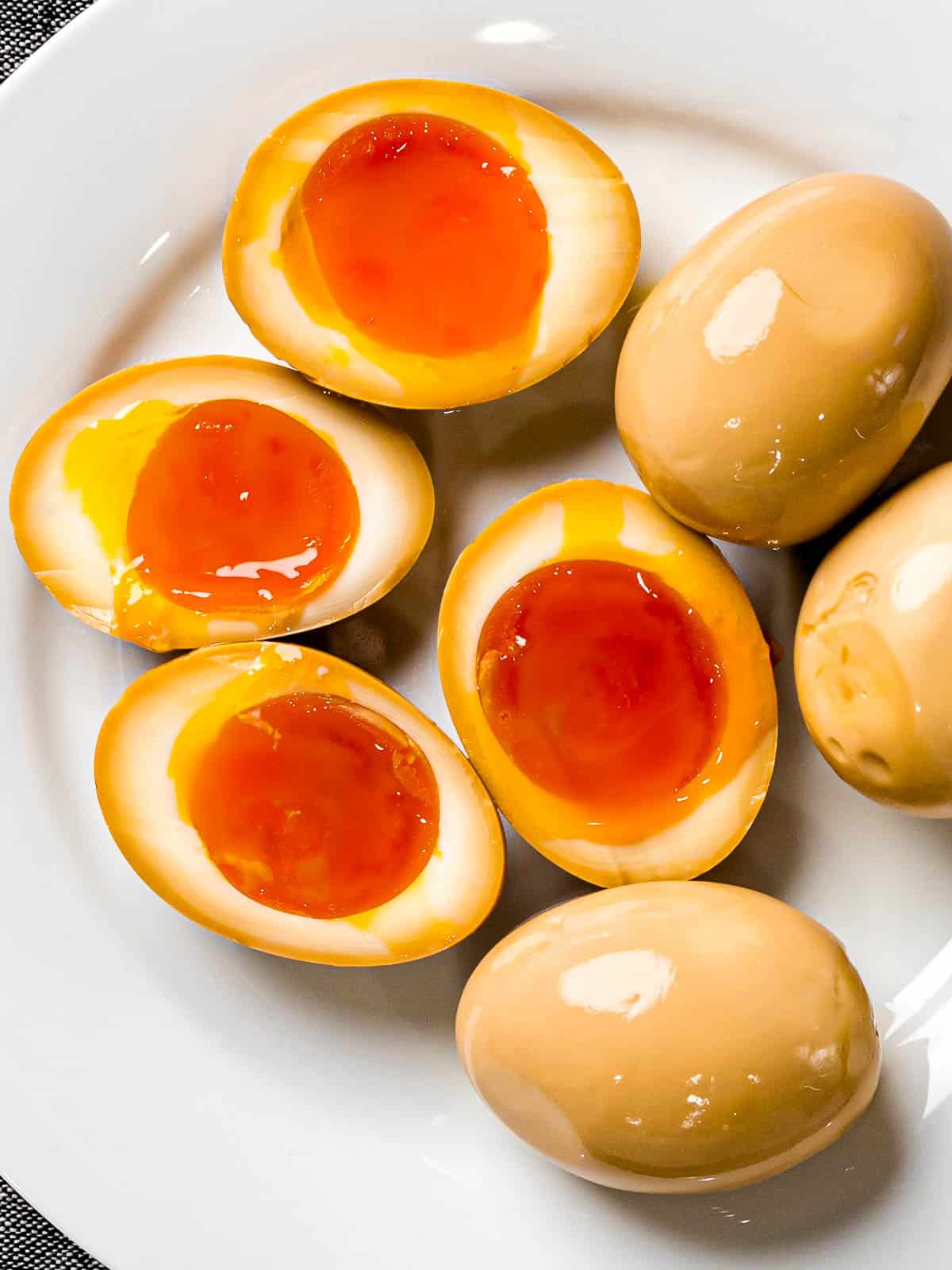
Ramen eggs are delicious soft boiled eggs that are marinated in a soy sauce and mirin mixture. No bowl of ramen is complete without these eggs in my opinion. They can have a soft, runny yolk, or a gelatinous jammy yolk according to your preference.
Ajitama has a savory, umami taste, and depending on how long they’ve been marinating for, they’ll have a stronger soy sauce flavor.
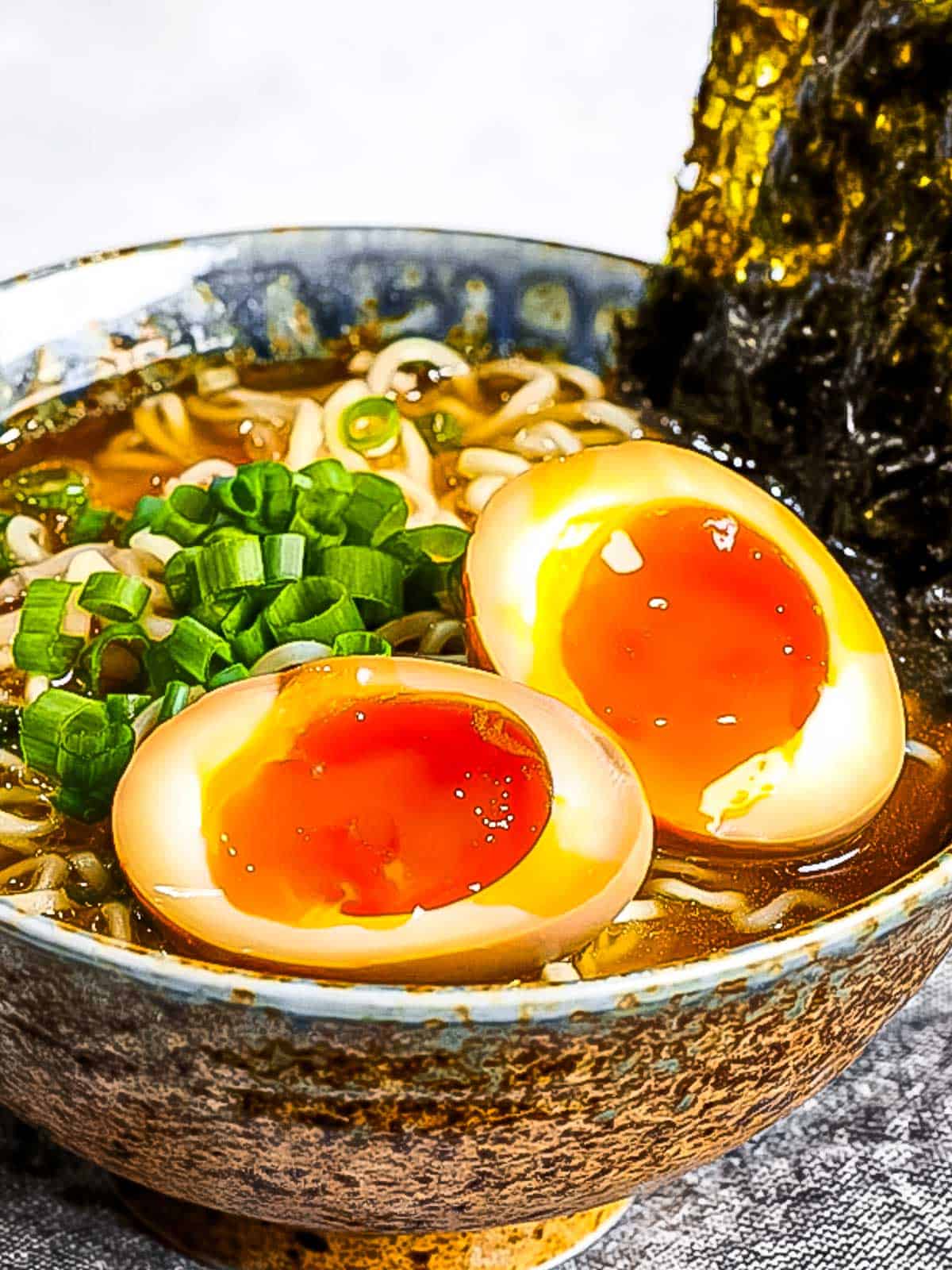
Ramen eggs are also known as soy sauce eggs, soy marinated eggs, or shoyu eggs. In Japan they go by ‘ajitama’ which is a portmanteau of ‘ajitsuke tamago’ (味付け玉子) which translates to seasoned eggs.
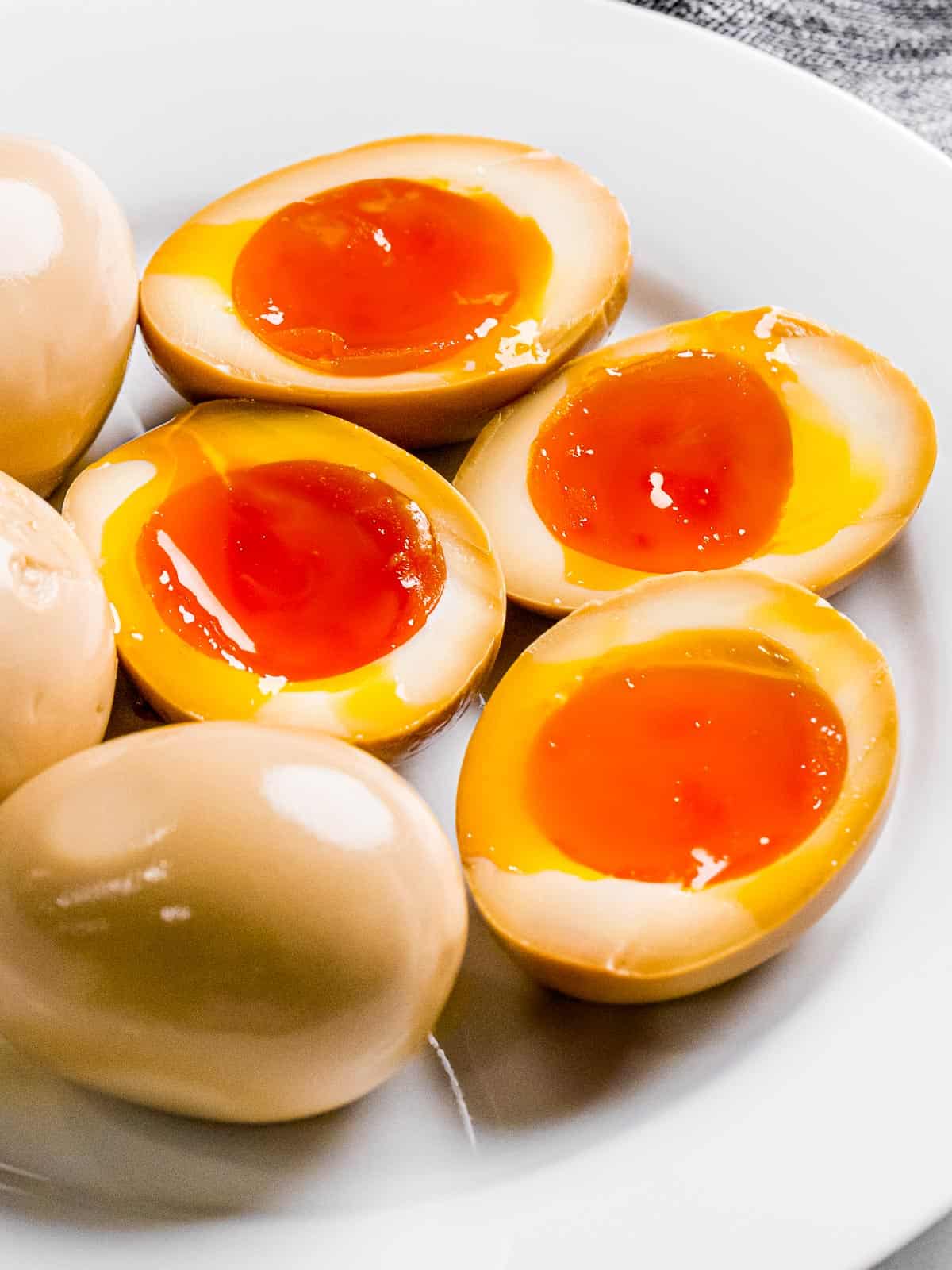
These soy sauce eggs also make a great snack and can be added to salads, rice bowl, or other noodles. Ramen eggs are low carb, naturally keto friendly, and high in protein.
Ingredients
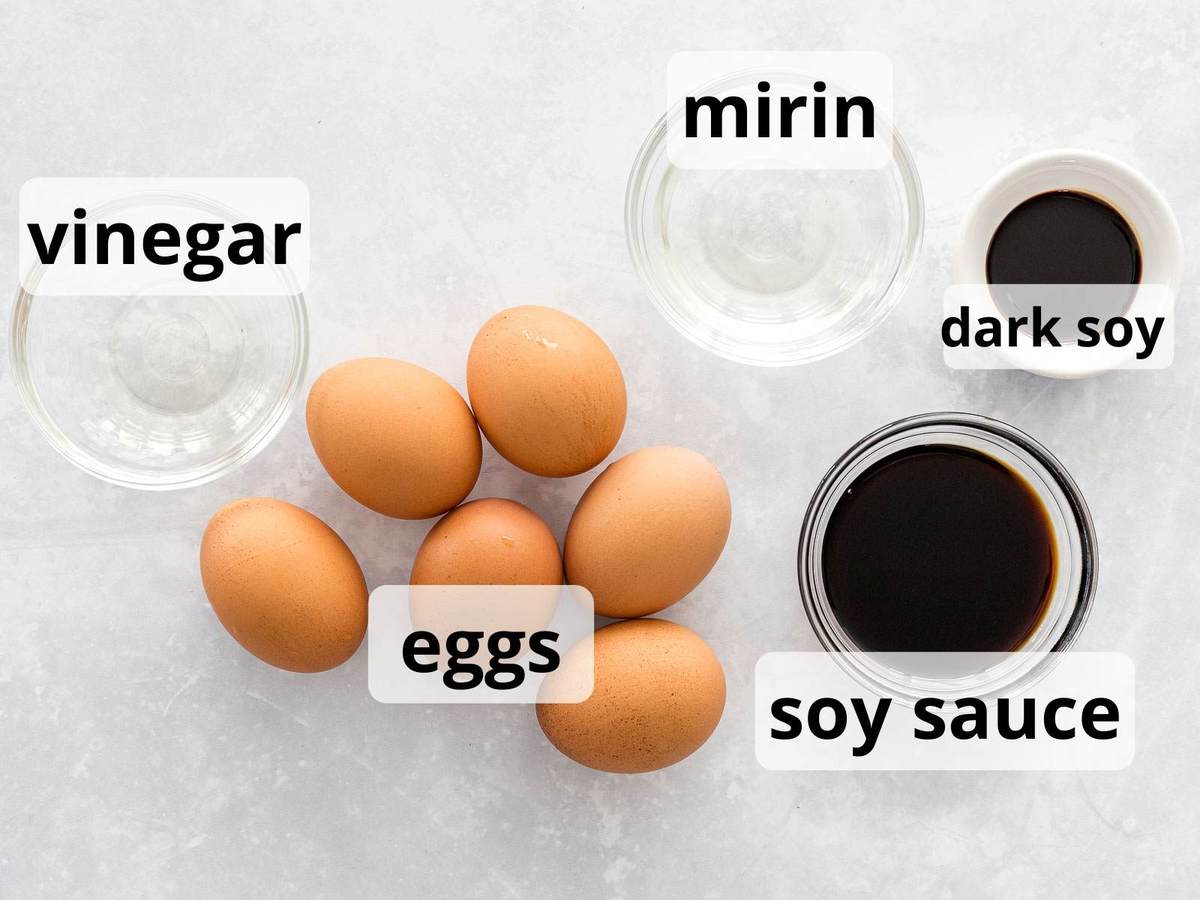
- Eggs – I used large eggs; cooking times are based on this size. Tip: Older eggs are easier to peel.
- Vinegar – Adding vinegar when boiling eggs softens the shell which makes it easier to peel.
- Mirin – This is a Japanese rice wine. Substitute with water or stock with a pinch of sugar and a few drops of vinegar.
How to Make Ramen Eggs – Soy Sauce Eggs
Soft Boiled Eggs:
Cold eggs: Boil for 7 minutes straight from the fridge. Starting with cold eggs protect the center yolk from over cooking.
Room temperature eggs: Allow the eggs to come to room temperature for about 30 minutes prior to cooking. Boil for 6 minutes. The egg shell is less likely to crack due to less variance in temperature.
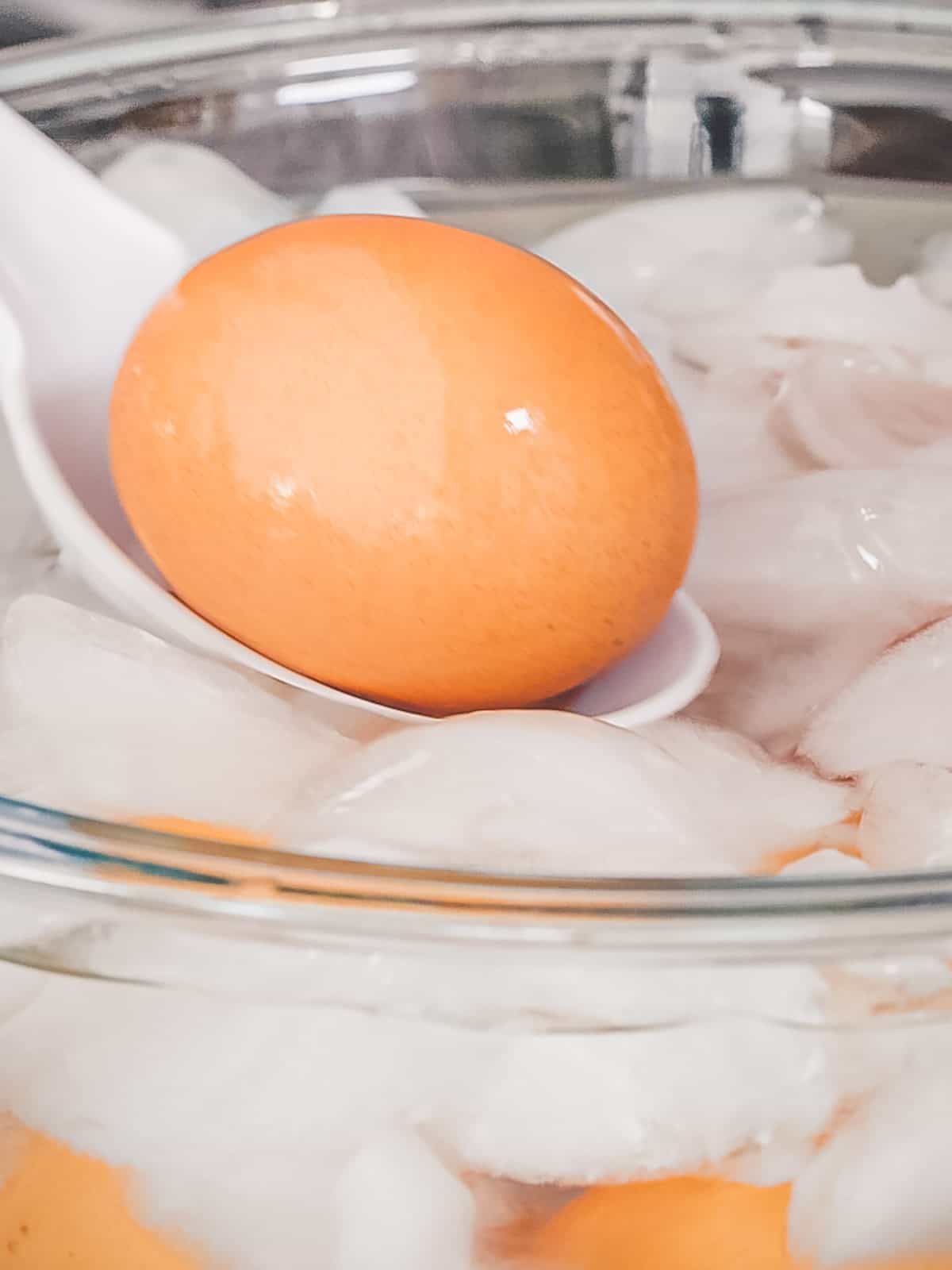
Ice Bath: Prepare in advance and immediately transfer the eggs to an ice bath to stop further cooking.
Make Marinade:
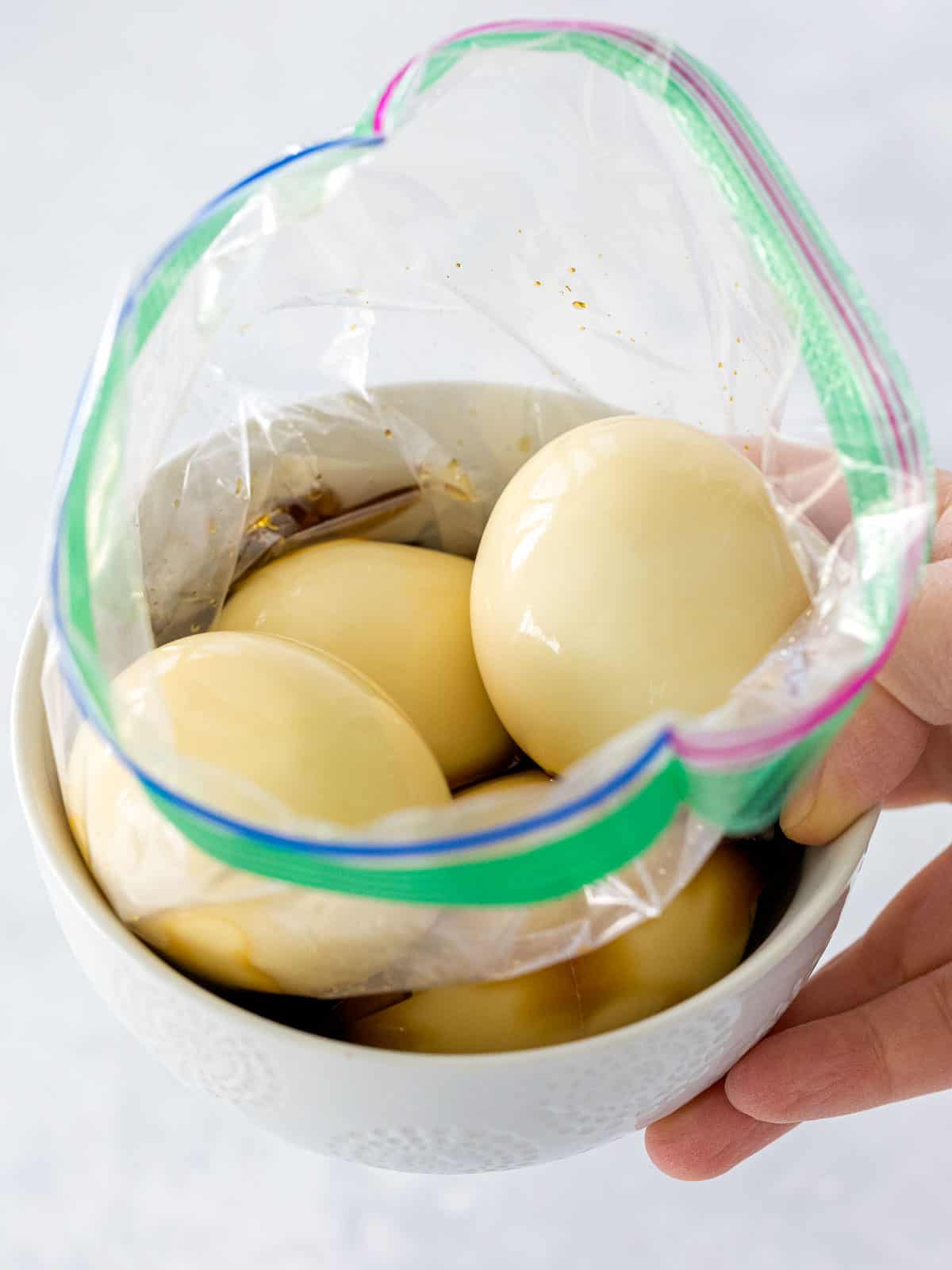
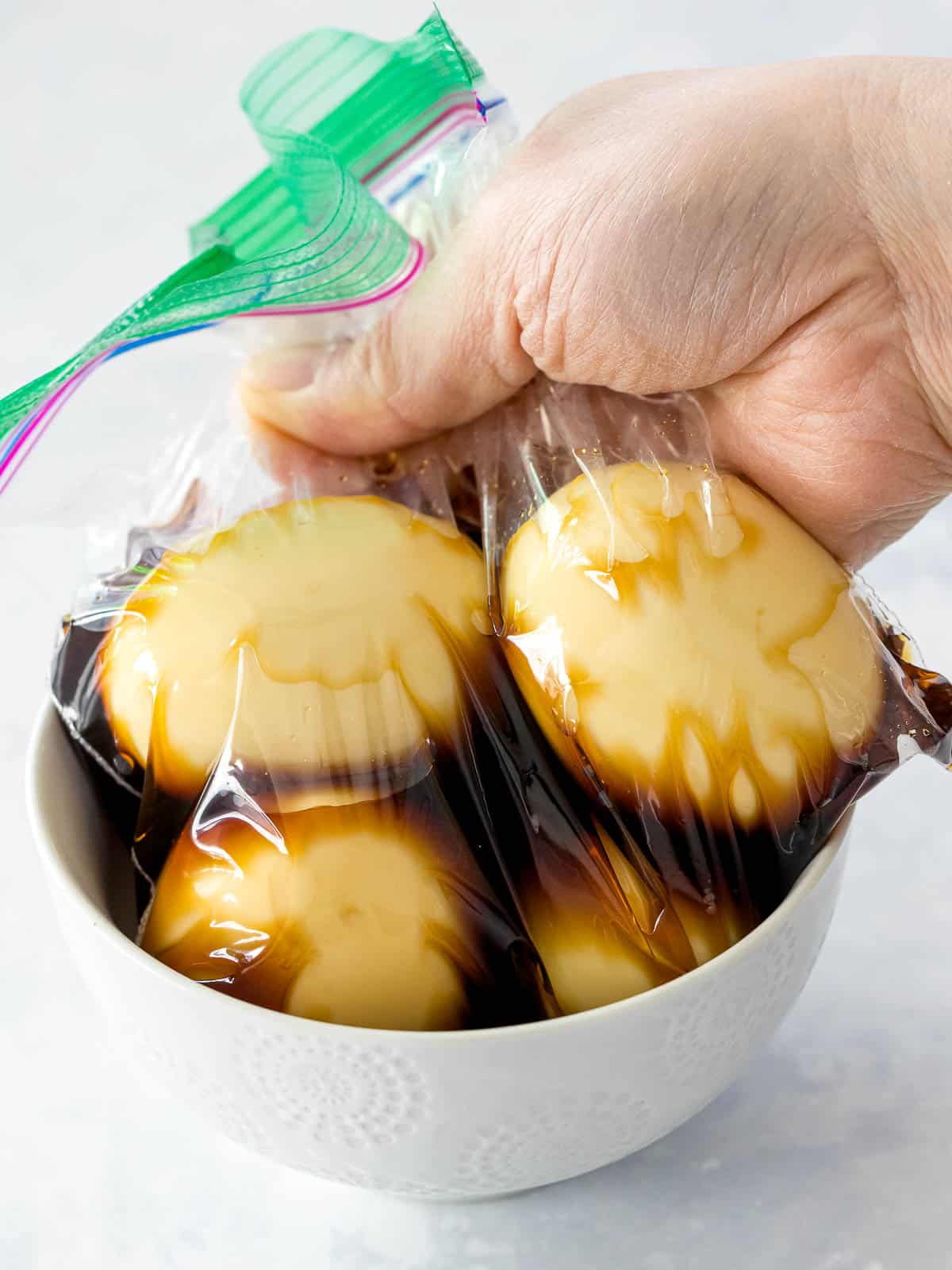
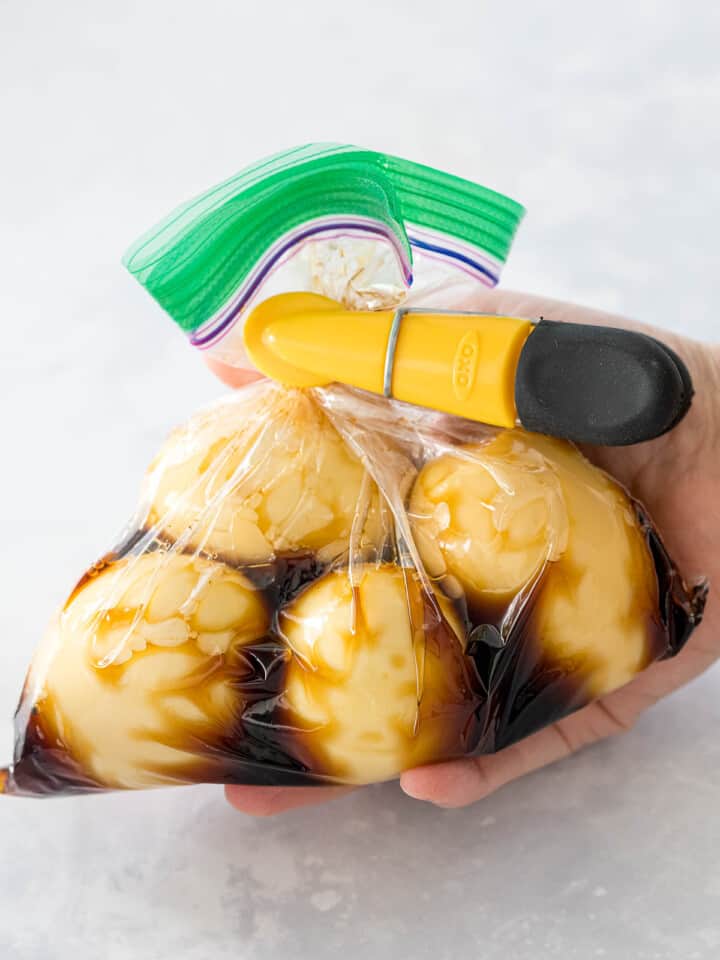
Add the ingredients for the marinade in a plastic ziplock bag and place it in a bowl for stabilization. Gently add the eggs, then push out any extra air.
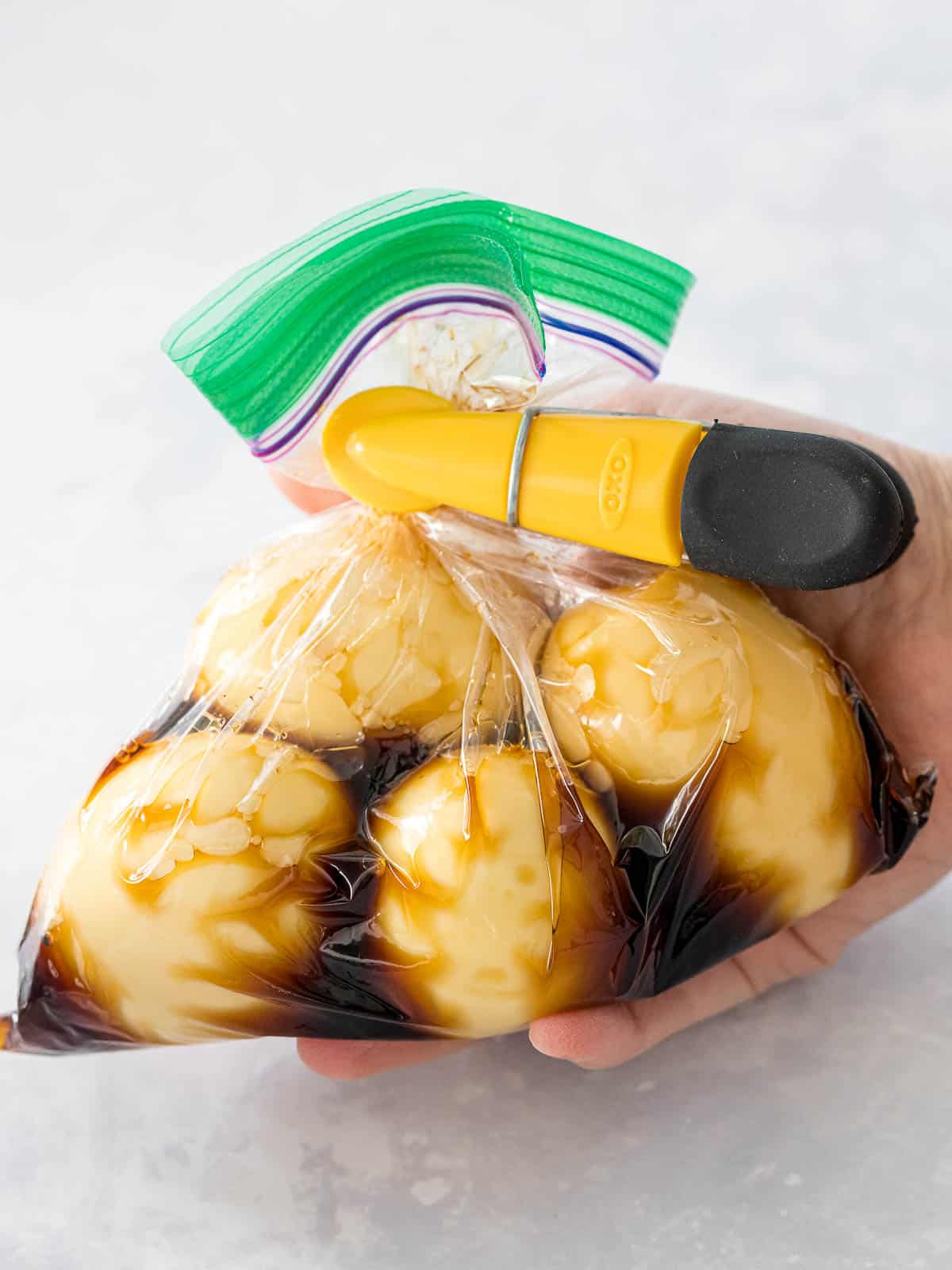
Twist and clip the bag closed to allow the marinade to completely cover the eggs. This allows you to make a smaller amount of marinade without any waste.
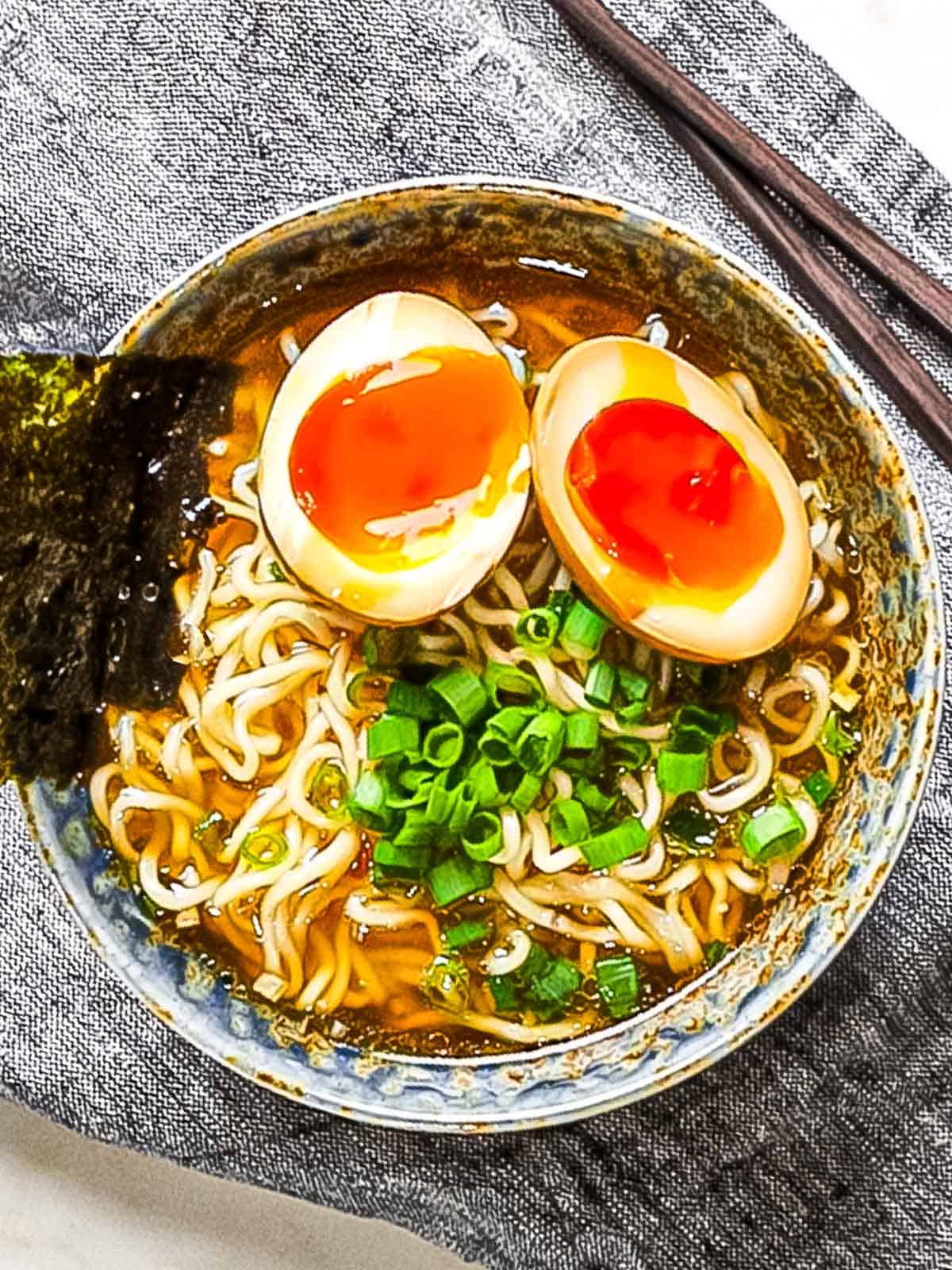
Soy sauce eggs can be used after 1 hour and up to 3 days later. Cut in half and serve atop a hot bowl of ramen. Enjoy!
Substitutions & Variations
- For ramen eggs made without mirin: Use water or stock with a pinch of sugar and a few drops of vinegar. Mirin is a Japanese rice wine that’s slightly sweet and acidic with a low alcohol content. There are also non-alcoholic mirin available.
- Spices: Feel free to add a few slices of ginger or garlic to the marinade.
FAQ
For cold eggs directly from the fridge, boil for 7 minutes. For room temperature eggs, boil for 6 minutes. Immediately place them in an ice bath.
I recommend consuming within 3 days of making them. Store them in the marinade in the fridge.
If you’d like to reuse the marinade, I suggest boiling and cooling it first. But I recommend making a fresh batch of marinade for best flavor.
I hope you enjoy this recipe! Please share, rate, or comment below. I’d love to hear from you!
Come find me on Facebook, Pinterest, and Instagram! Share your recipes by tagging @drivemehungry. I love seeing your creations!
Thanks so much for stopping by! ? -Jamie
More recipes:

Asian Recipes
Mayak Egg (Korean Marinated Eggs)
Appetizers
Easy Classic Keto Deviled Eggs
Asian Recipes
Yaki Udon | Stir Fried Udon Noodles
Main Dishes
Japanese Hamburger Steak (Hambāgu ハンバーグ)

Ramen Eggs – Soy Sauce Marinated Eggs
Ingredients
- 6 eggs
- 1 Tablespoon vinegar, for easy peeling
Ramen Egg Marinade
- ½ cup water or stock
- 5 Tablespoons soy sauce
- 4 Tablespoons mirin, see Note 1 for substitutions
- 2 teaspoons dark soy sauce, (optional for deeper color)
Instructions
Soft Boil Eggs
- Soft boiled eggs: Bring a large pot of water to a boil. Add vinegar for easy peeling, then gently lower each egg into the pot. Set a timer for 6 minutes for room temperature eggs or 7 minutes for cold eggs from the refrigerator. See Note 2.Stir the eggs in one direction for the first 30 seconds for an even cross section.6 eggs, 1 Tablespoon vinegar
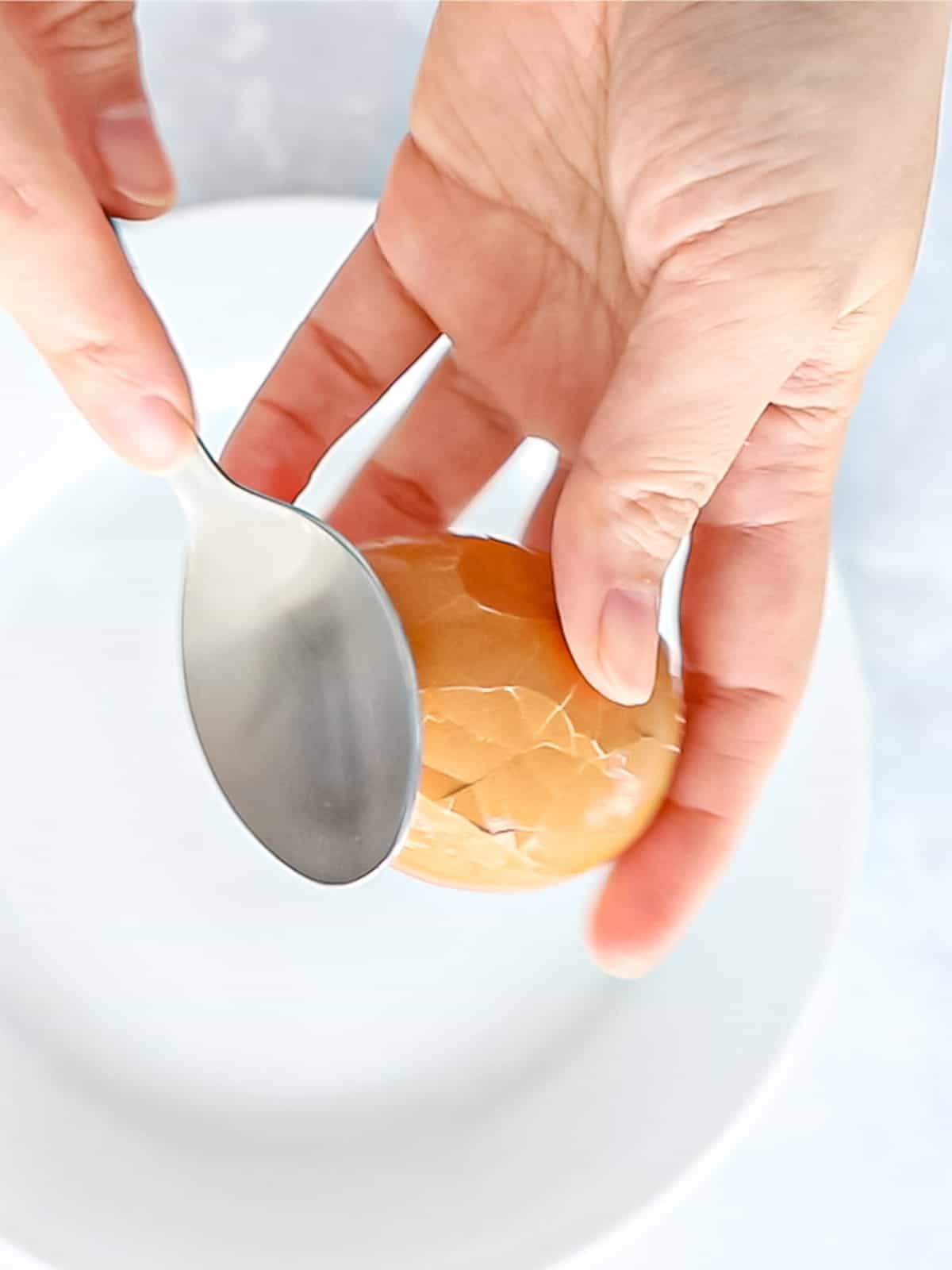
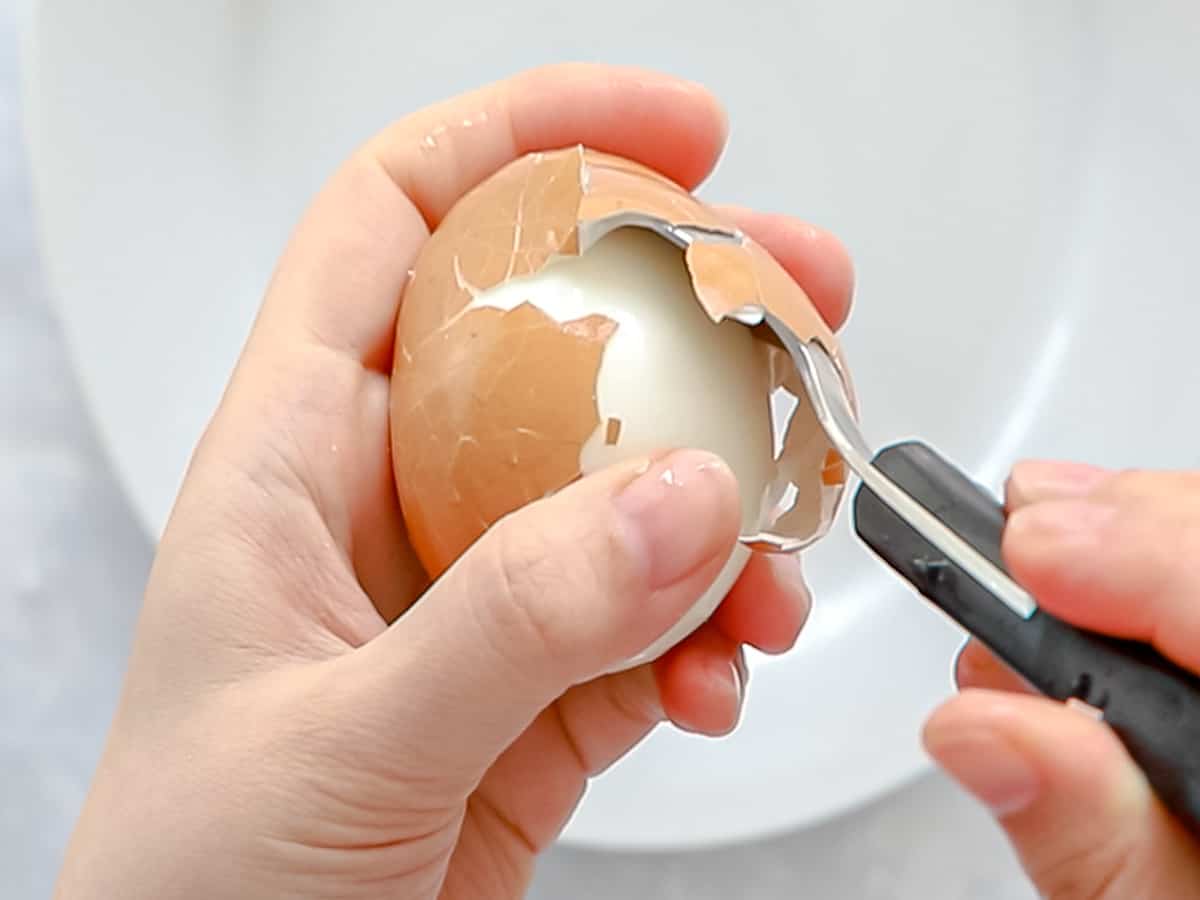
- Peel eggs: After the timer is up, place the eggs in an ice bath to stop cooking. Once cooled, crack the shell all over and carefully peel by inserting a spoon between the egg and shell.

Marinate Eggs
- Marinate eggs: Place a ziplock plastic bag in a small bowl or cup for stabilization. Then add the water or stock, soy sauce, mirin, and optional dark soy sauce to the plastic bag. Gently place the eggs inside the bag and squeeze the air out of the bag to ensure the eggs are covered in the marinade. Add more water or stock if needed. Twist and clip the bag closed. This allows for a smaller amount of marinade to cover the eggs without extra waste.Marinate in soy mirin mixture for up to 3 days in the fridge.½ cup water or stock, 5 Tablespoons soy sauce, 4 Tablespoons mirin, 2 teaspoons dark soy sauce
- Serve: Cut in half and place on top of ramen noodles or rice bowls. Enjoy!
Notes
- Mirin substitutions – Mirin is a Japanese rice wine that’s slightly sweet and acidic. For a non-alcoholic substitute, use water or stock with a pinch of sugar and a few drops of vinegar. Otherwise replace with half sake and half water, with a pinch of sugar.
- Boiling eggs – Be sure to boil the eggs in a pot large enough to hold them in a single layer. If your pot is too small, the eggs will lower the temperature of the water too much and the whites won’t set in time. Stir in one direction for first 30 seconds for an even cross section. Room temperature eggs should be left on the counter for 30 minutes prior to boiling.
- Marination time – Ramen eggs can be marinated in the fridge for up to 3 days. They can be enjoyed 1 hour after marinating but will taste best the next day.
- Storage – Store remaining eggs in the marinade for up to 3 days in the fridge.
Nutrition
Nutrition information is automatically calculated, so should only be used as an approximation.
Like this? Leave a comment below!










I usually use plain soft boiled eggs to put on ramen noodle bowls but wanted something tastier. These were a great complement and will be making them this way from now on.
Thanks for sharing Kristina! Glad you enjoyed them!
I didn’t even know marinated eggs were a thing! These look incredible and I think I’ll try them tomorrow for Easter as we didn’t get around to dying our eggs!
Please do and let me know how you like them!
Perfect timing when I saw this because I was planning to make ramen and had all the ingredients. I didn’t let it marinate for long but it still tasted amazing. I have extra saved in the fridge for tomorrow and I’m sure it’ll taste even better!
That’s great Amy! So happy to hear that!
Cant wait to try these flavorful soy sauce marinated eggs with my next bowl of ramen. Thanks for sharing!
I have never heard of ramen eggs before, but your recipes sure sounds delicious. I can’t wait to try it.
This is the ONLY recipe you need for ramen eggs. I have made them maybe 10 times and they are perfect. I serve them in ramen but also sometimes in a salad when I am doing meal prep for my lunches. They’re simple to make but the flavour is second to none.
Aww thank you Alexandra! Agreed, ramen eggs are great in other dishes too.
These eggs are my favorite and “must-have” topping for my ramen! I usually make a few batches regularly and keep them in the fridge. Thank you for posting this fantastic recipe!
Thanks so much Yu! I usually make extra and keep them in the fridge too! 🙂
Finally! Easy, fabulous, delicious!
And thank you for the spoon trick!
You’re very welcome Vanessa! Happy to hear you enjoyed the recipe!
Could someone please clarify one point for me: Do you bring cold eggs and water to a boil together or do you add cold eggs to already boiling water? Thanks!
Hi Ryder! Bring water to a boil first, then add the eggs. If your eggs are cold, I suggest boiling for 7 minutes. If the eggs are room temperature, boil for 6 minutes. Hope that helps!
Can the marinade be reused after you’ve eaten all the eggs or should you make a fresh batch with each new batch of eggs?
Hi Erin! For the best flavor, I recommend making a fresh batch of marinade each time. If you place the eggs in a resealable sandwich bag, you can cut down on the amount of marinade needed. But if you really want to reuse the marinade, I advise boiling it first and letting it cool before using.
I’m obsessed with these ramen eggs! I love to add them to noodles with a little chili crunch on top. Before I used regular boiled noodles, but this is my favorite way to make them now. Simply the best! If you love soy sauce and those flavors, you will LOVE this.
Noodles, chili crunch, and ramen eggs sound so good! Thanks for sharing Krysten!
Just tried out these ramen eggs and they are a game-changer for my homemade ramen! The soy sauce marinade is super simple but adds so much flavor to these eggs. I’m never going back to regular eggs again for my ramen.
Thanks Savita! So happy you enjoyed this!
Following this recipe, got ramen eggs cooked to perfection and tasting just restaurant-like! Thank you!
Aww thank you Laura!
We served these on top of a rice bowl and they were so good! Perfectly jammy and so much flavor!
Yay for jammy yolks! Thanks for sharing Veronika!
This is the first time making these soy sauce eggs and they turned out amazing! I am addicted.
So glad to hear that Katie! Thanks for trying the recipe!
I love making these ramen eggs! The soy sauce flavor takes them over the top.
Thanks for sharing Kim!
Hands down the best ramen eggs I’ve tried! It’s easy, not overly complicated like other recipes, and gives me perfectly soft boiled eggs every time.
So glad to hear these are the best ramen eggs! Thanks for sharing D!
Jammy eggs are the best part of ramen I swear. These were so yummy and seriously a meal on their own! I ended up doubling them up because they are SO GOOD!
Agreed! I think ramen eggs are the best part of ramen too!
I usually double this recipe to have extra on hand for other meals or as a protein snack. Sometimes I add the dark soy sauce but other times have made it without it and it still tastes great.
Thanks for sharing Vera!
This recipe is so good!! I am so excited to make this again over the weekend, thank you so much for sharing this recipe 🙂
Thanks Cathleen! So happy to hear you’re making it again!