
As an Amazon Associate I earn from qualifying purchases. This post may contain affiliate links.

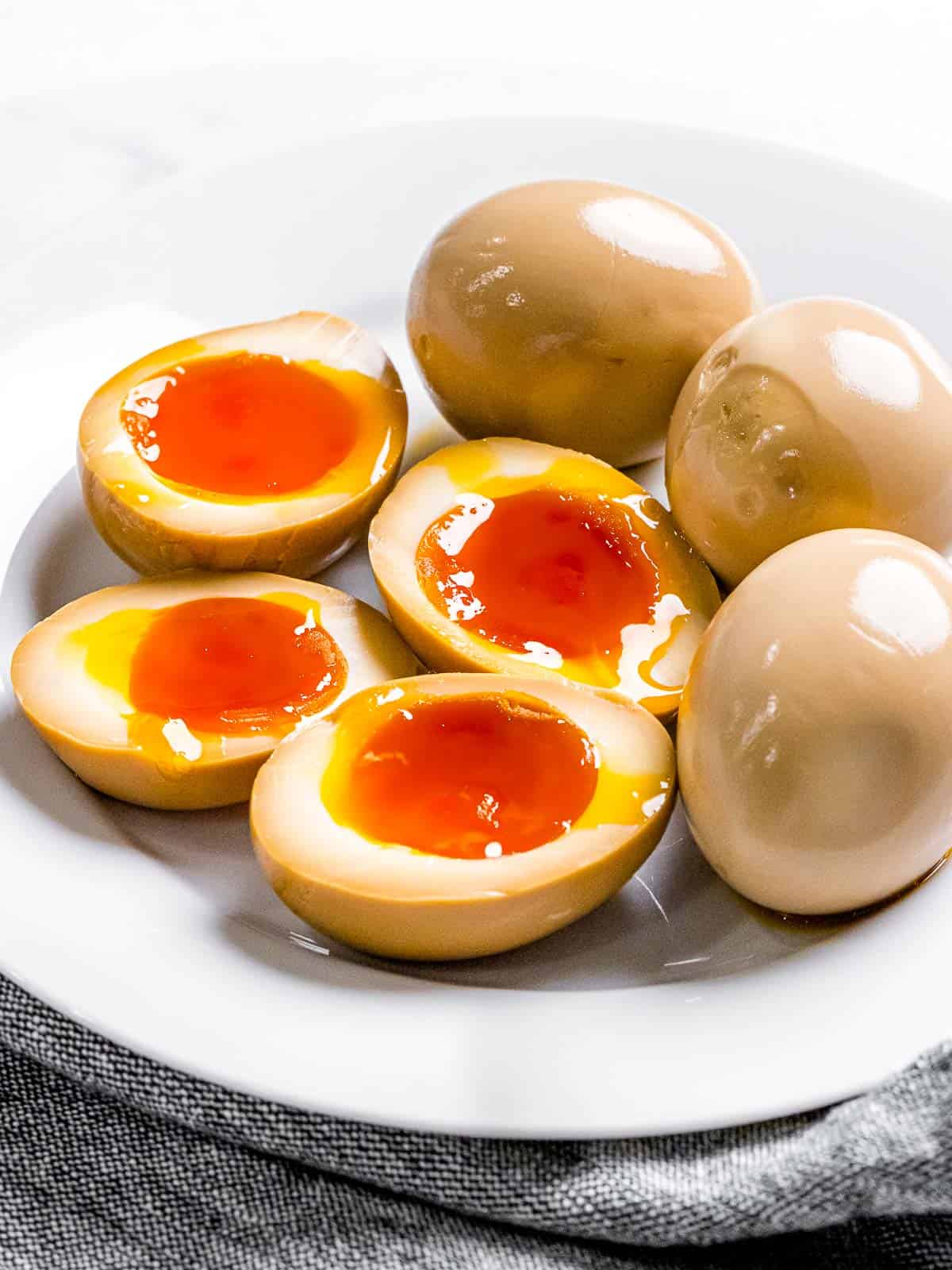
Ramen eggs are soft-boiled eggs soaked in a soy sauce and mirin marinade for a savory, umami egg with a runny or jammy yolk. Boil, chill, bag, and they’re ready in an hour.
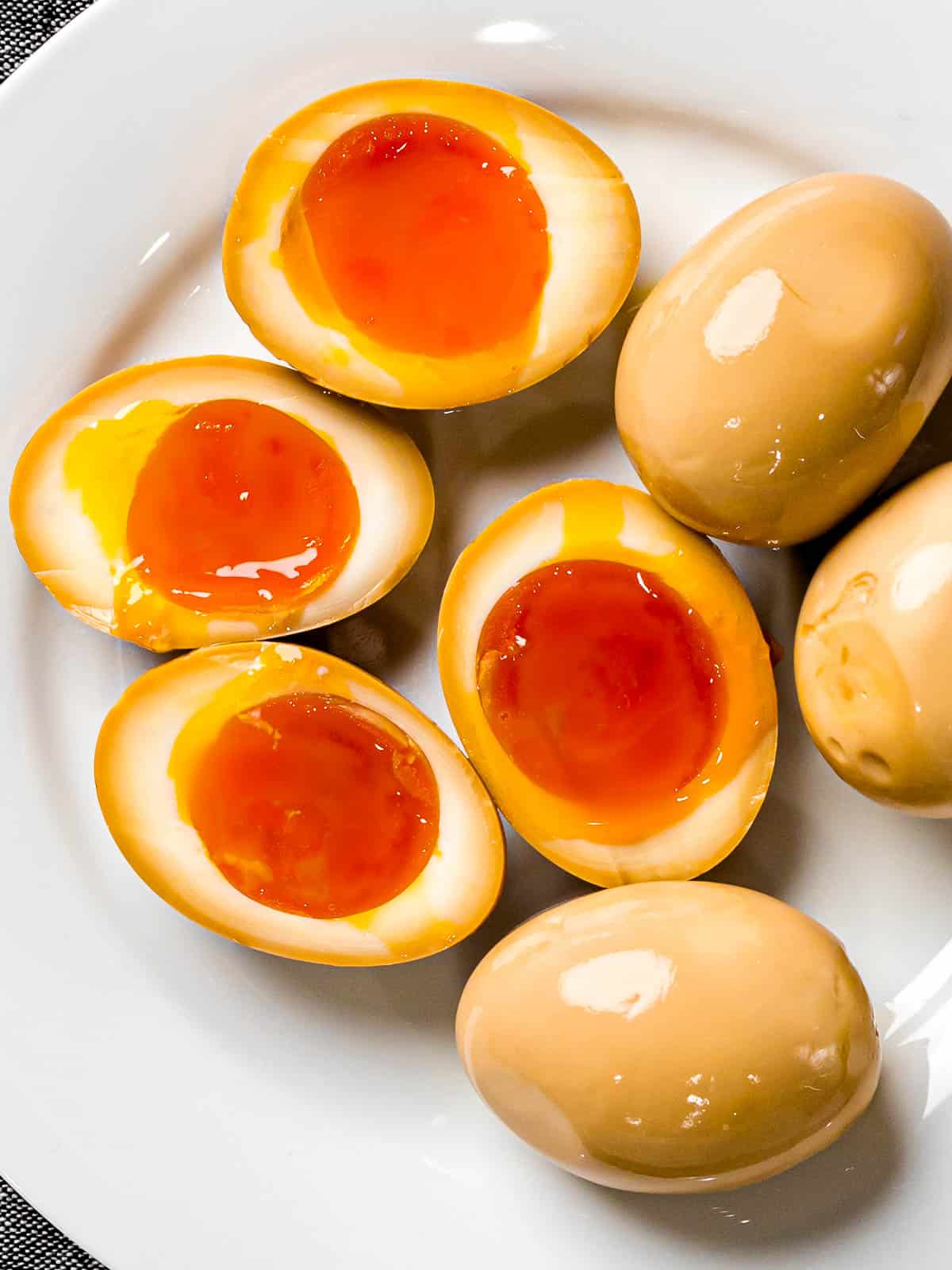
No bowl of ramen is complete without a ramen egg, in my opinion. In Japan, they’re called ajitama, short for ajitsuke tamago (味付け玉子), which means seasoned egg. You’ll also see them called soy sauce eggs, shoyu eggs, or soy-marinated eggs.
This is my go-to method for making them at home. The eggs are timed for either a runny or jammy yolk, and I give you two timings depending on whether your eggs come straight from the fridge or have been sitting out. Then they marinate in a zip-top bag, which lets a small amount of marinade cover all six eggs with nothing wasted.
They’re savory and full of umami, and the longer they sit, the deeper the soy flavor gets. Slice one over ramen, a rice bowl, or a salad, or eat one as a snack.
RECIPE AT A GLANCE
What it is: Japanese ramen eggs (ajitama): soft-boiled eggs marinated in soy sauce and mirin, with a runny or jammy yolk.
Why it works: Starting the eggs in already boiling water gives you exact timing. A fast ice bath stops the yolk from overcooking. Marinating in a zip-top bag lets about 1 cup of marinade fully cover 6 eggs.
Time: 6 minutes boiling for room temperature eggs, 7 minutes for cold eggs, then at least 1 hour marinating. Best the next day.
Make-ahead and storage: Keep the eggs in their marinade in the fridge for up to 3 days. The soy flavor gets stronger the longer they sit.
Serve with: Ramen, rice bowls, salads, other noodle dishes, or on their own as a snack.
No mirin? Use water or stock with a pinch of sugar and a few drops of vinegar, or half sake and half water with a pinch of sugar.
Want more flavor? Add a few slices of ginger or garlic to the marinade.
The Perfect Way to Level Up Your Ramen at Home

The jammy egg is my favorite part of a bowl of ramen. Whenever I go out for ramen, I can’t help but order an extra one on the side. Making them at home became my favorite way to turn a simple pack of instant ramen into something restaurant-worthy.
What I love most is the flavor. The soy sauce gives the eggs a deep, savory umami, and the mirin balances it with a little sweetness and a gentle tang. After an hour they’re lightly seasoned, but by the next day the flavor has really soaked in, and it pairs perfectly with that soft, jammy yolk.
The two things I won’t skip are timing by egg temperature and the ice bath. Cold eggs straight from the fridge get 7 minutes, room temperature eggs get 6, and both go straight into ice water so the yolk stops cooking right where I want it.

Table of Contents
- RECIPE AT A GLANCE
- The Perfect Way to Level Up Your Ramen at Home
- What Are Ramen Eggs (Ajitama)?
- Ingredients for Ramen Eggs
- How to Make Ramen Eggs
- Tips for Perfect Ramen Eggs
- How to Store Ramen Eggs
- Substitutions and Variations
- Ways to Use Ramen Eggs
- Frequently Asked Questions
- Ramen Eggs (Soy Sauce Marinated Eggs) Recipe
What Are Ramen Eggs (Ajitama)?
Ramen eggs are soft boiled eggs marinated in a soy sauce and mirin mixture, usually sliced in half and served on top of ramen. In Japan they’re called ajitama, a shortened form of ajitsuke tamago (味付け玉子), which translates to “seasoned egg.”
The yolk can be runny or set to a jammy, gel-like center according to your preference. The flavor is savory and full of umami, and it gets stronger the longer the eggs marinate.
In English you’ll see them called soy sauce eggs, shoyu eggs, soy marinated eggs, or simply marinated eggs. They’re the same thing.
Ingredients for Ramen Eggs
You need six pantry ingredients, and two of them are optional. Full amounts are in the recipe card below.
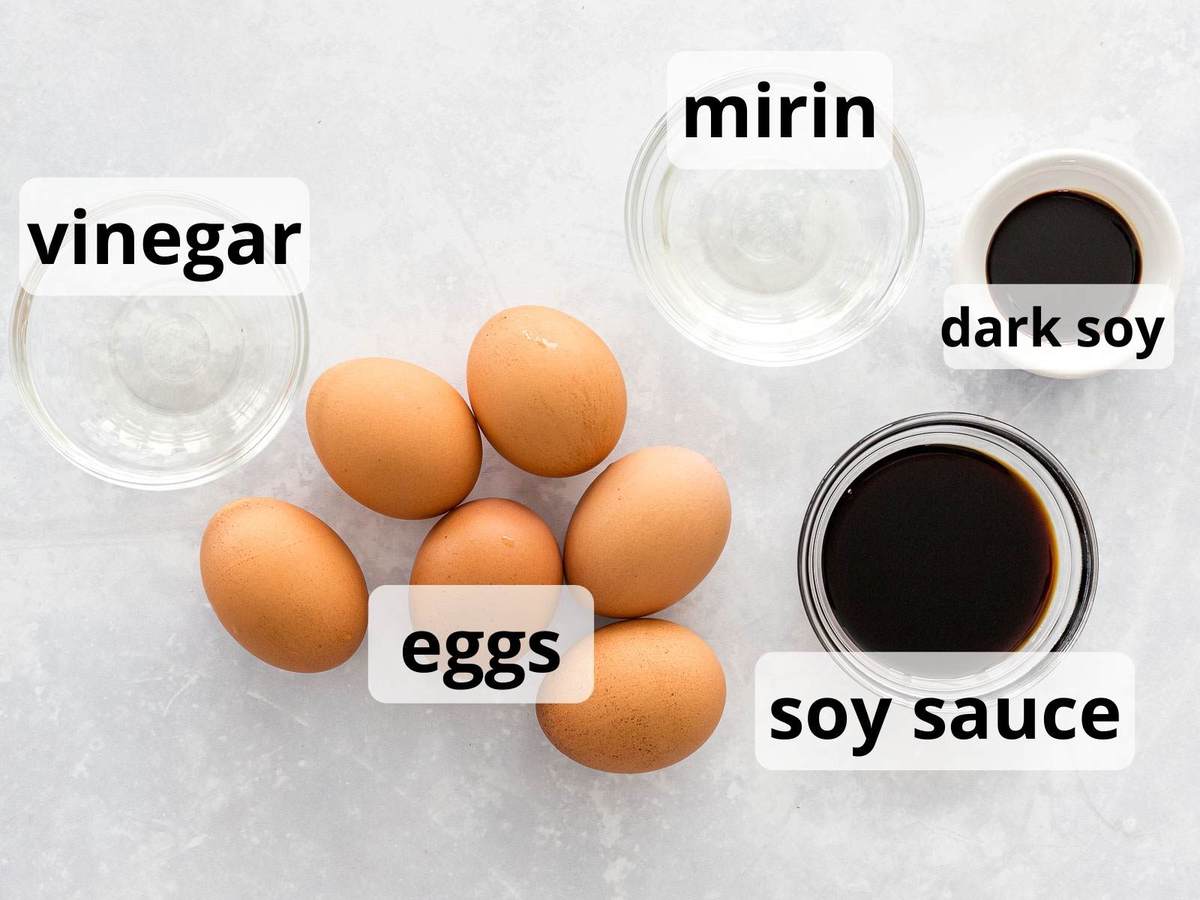
For the eggs:
- Eggs: I use large eggs, and the cooking times are based on that size. Slightly older eggs are easier to peel than very fresh ones.
- Vinegar: A tablespoon in the boiling water softens the shell so the eggs peel more easily.
For the marinade:
- Water or stock: Thins the marinade so it covers the eggs without being too salty. Stock adds a little more savory flavor.
- Soy sauce: The main seasoning and the source of the umami flavor.
- Mirin: A slightly sweet, slightly acidic Japanese rice wine with a low alcohol content. Non-alcoholic mirin is also available. See substitutions below if you don’t have it.
- Dark soy sauce (optional): Only for a deeper color on the egg whites.
How to Make Ramen Eggs
1. Prep the ice bath. Fill a bowl with ice and water before the eggs go in. The eggs need to come out of the pot and into the ice immediately, so there’s no time to set it up later.
2. Decide on your timing. Cold eggs straight from the fridge boil for 7 minutes. Starting with cold eggs gives you more predictable timing and keeps the center of the yolk runny while the white sets. For room temperature eggs, let them sit on the counter for about 30 minutes first and boil for 6 minutes. They’re less likely to crack because the temperature change is smaller.
3. Boil the water. Bring a large pot of water to a boil, big enough to hold all the eggs in a single layer. In a pot that’s too small, the eggs drop the water temperature too much and the whites won’t set in time. Add the vinegar.
4. Lower in the eggs and start the timer. Gently lower each egg into the boiling water with a spoon or ladle.
5. Stir for 30 seconds. Stir the eggs gently in one direction for the first 30 seconds. This keeps the yolks centered so every egg slices evenly.
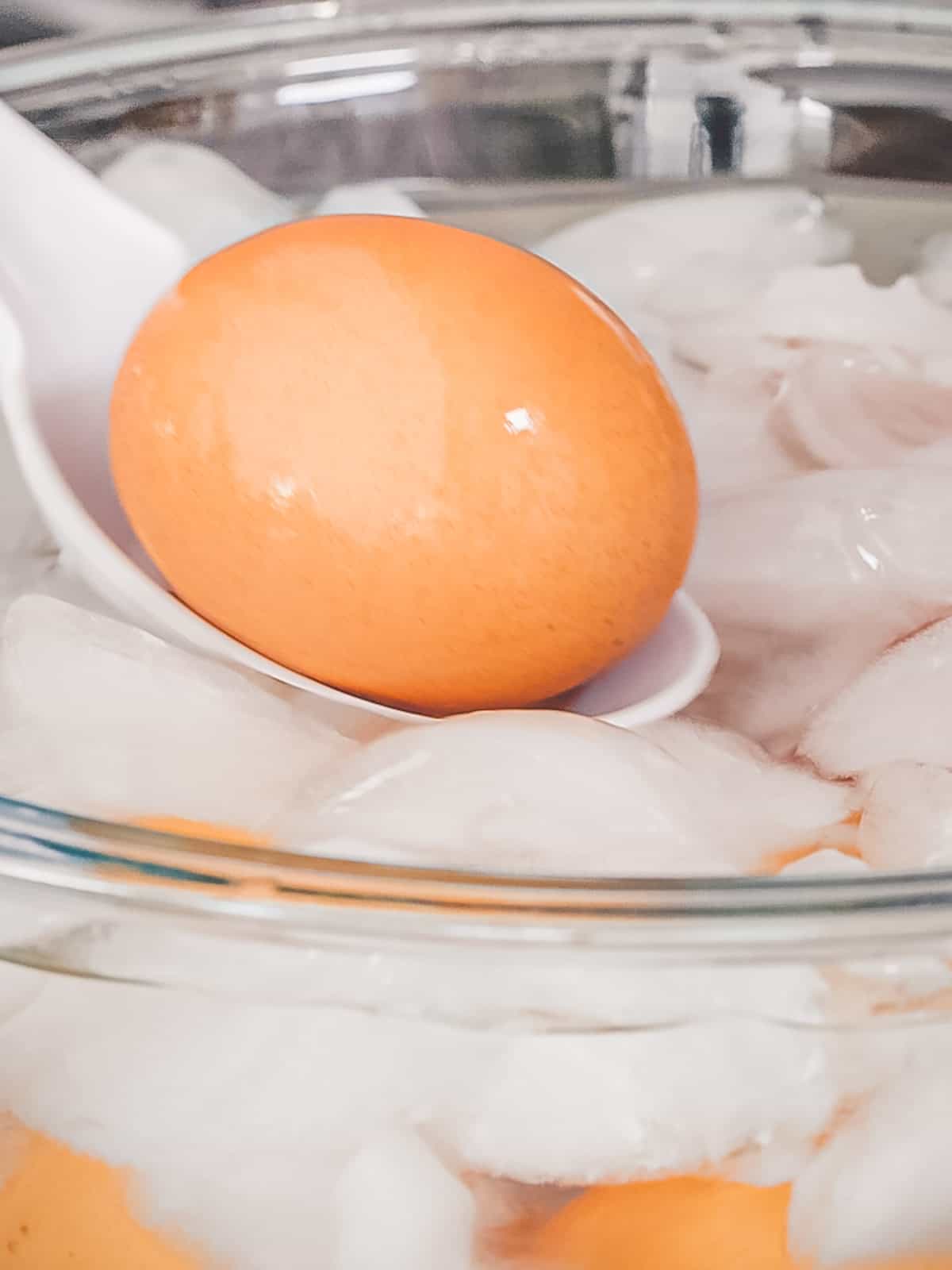
6. Ice bath. When the timer goes off, move the eggs straight into the ice bath to stop the cooking.
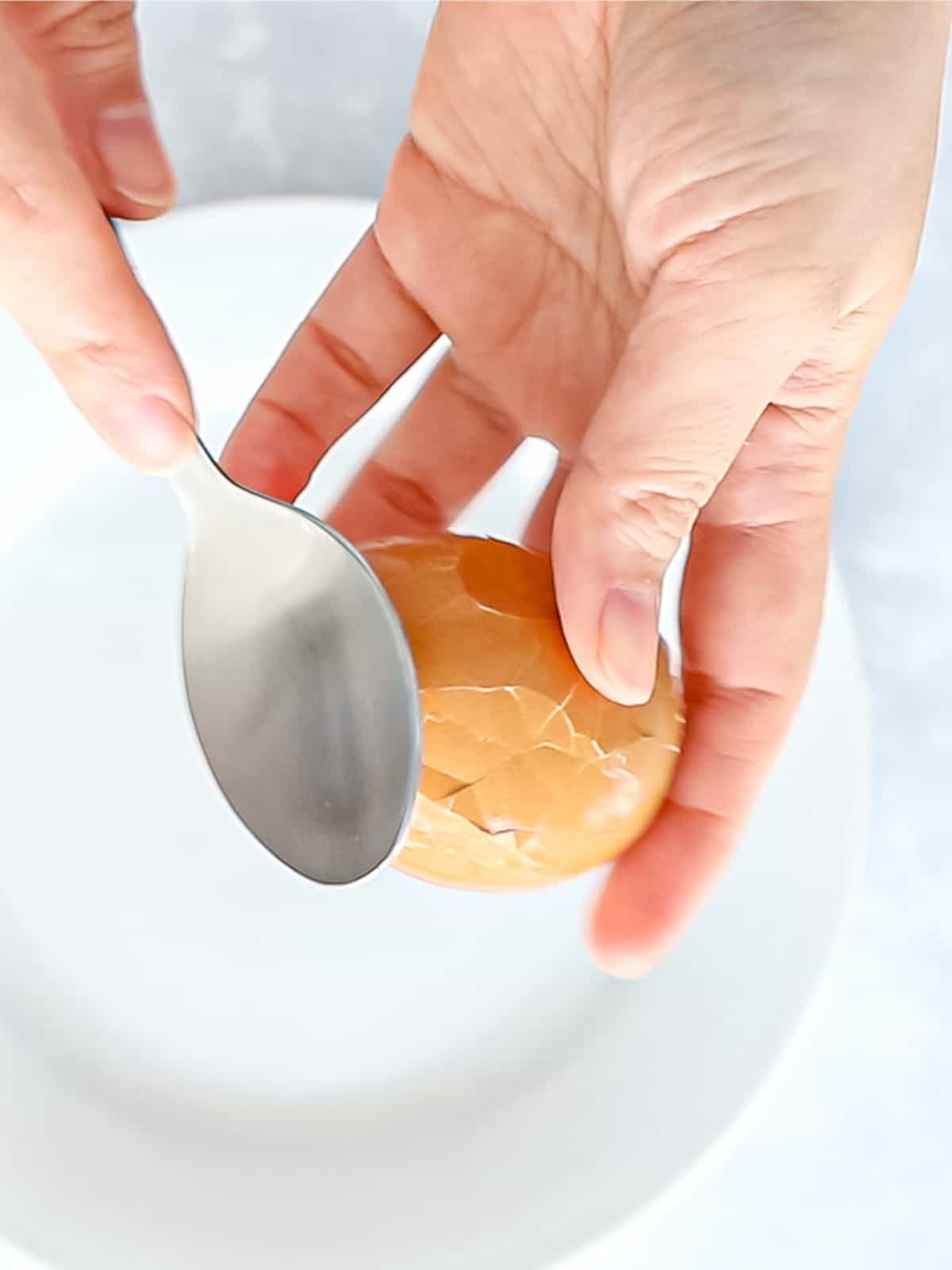
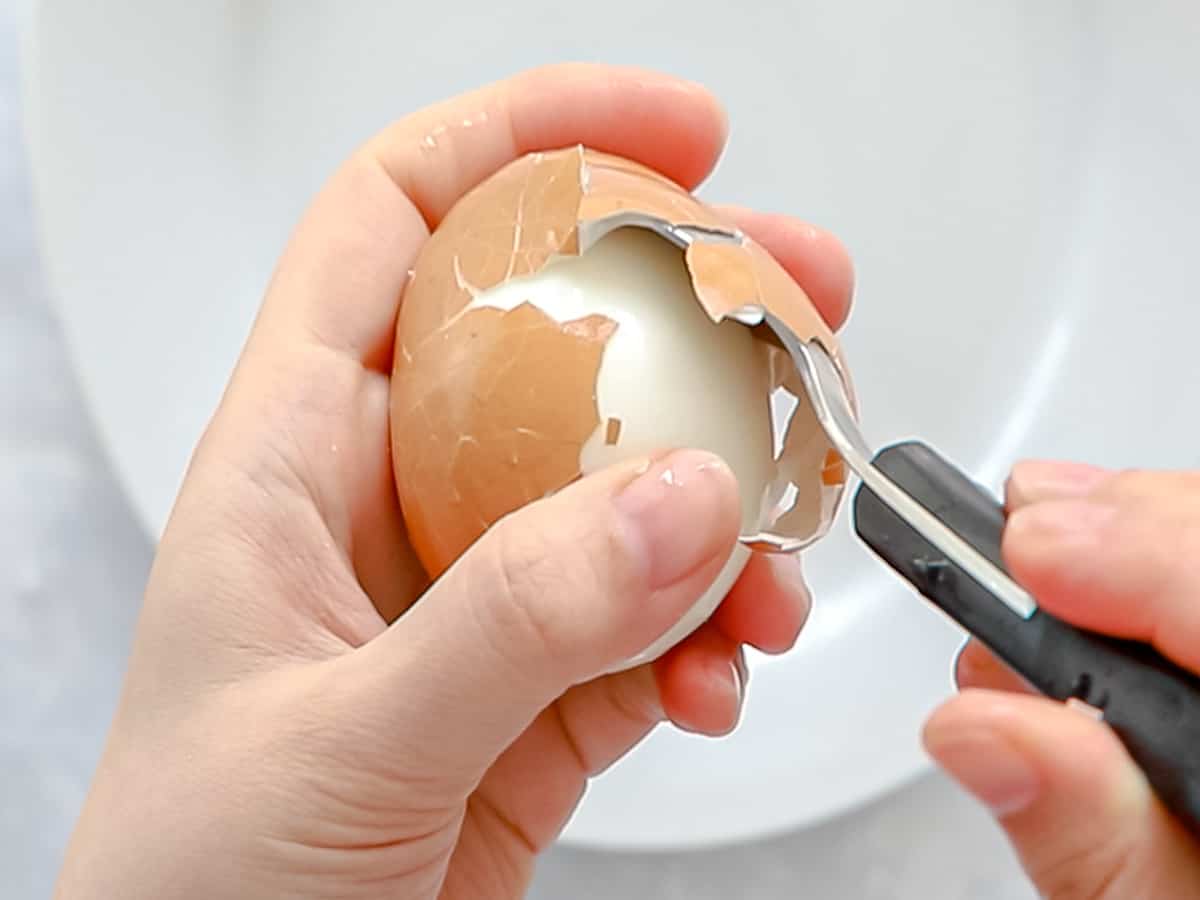
7. Peel. Once cooled, crack the shell all over and slide a spoon between the egg and the shell to peel it off cleanly.
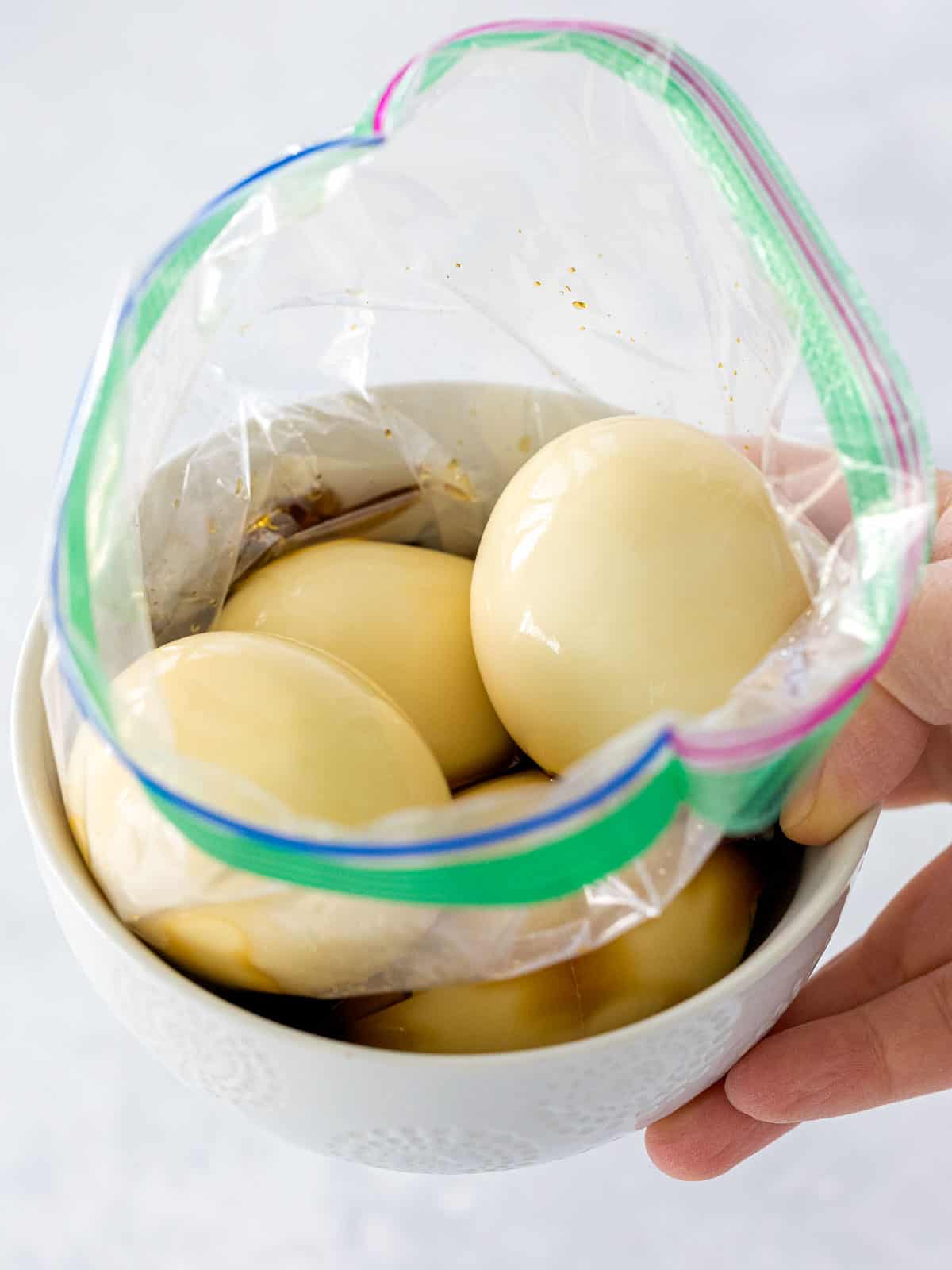
8. Mix the marinade in a bag. Set a zip-top bag inside a small bowl or cup so it stands up. Pour in the water or stock, soy sauce, mirin, and dark soy sauce, if using.
9. Add the eggs and seal. Gently add the peeled eggs, press out the air, then twist the bag closed and clip it. The eggs should be fully covered; add a little more water or stock if they aren’t. This is what lets a small amount of marinade do the job.
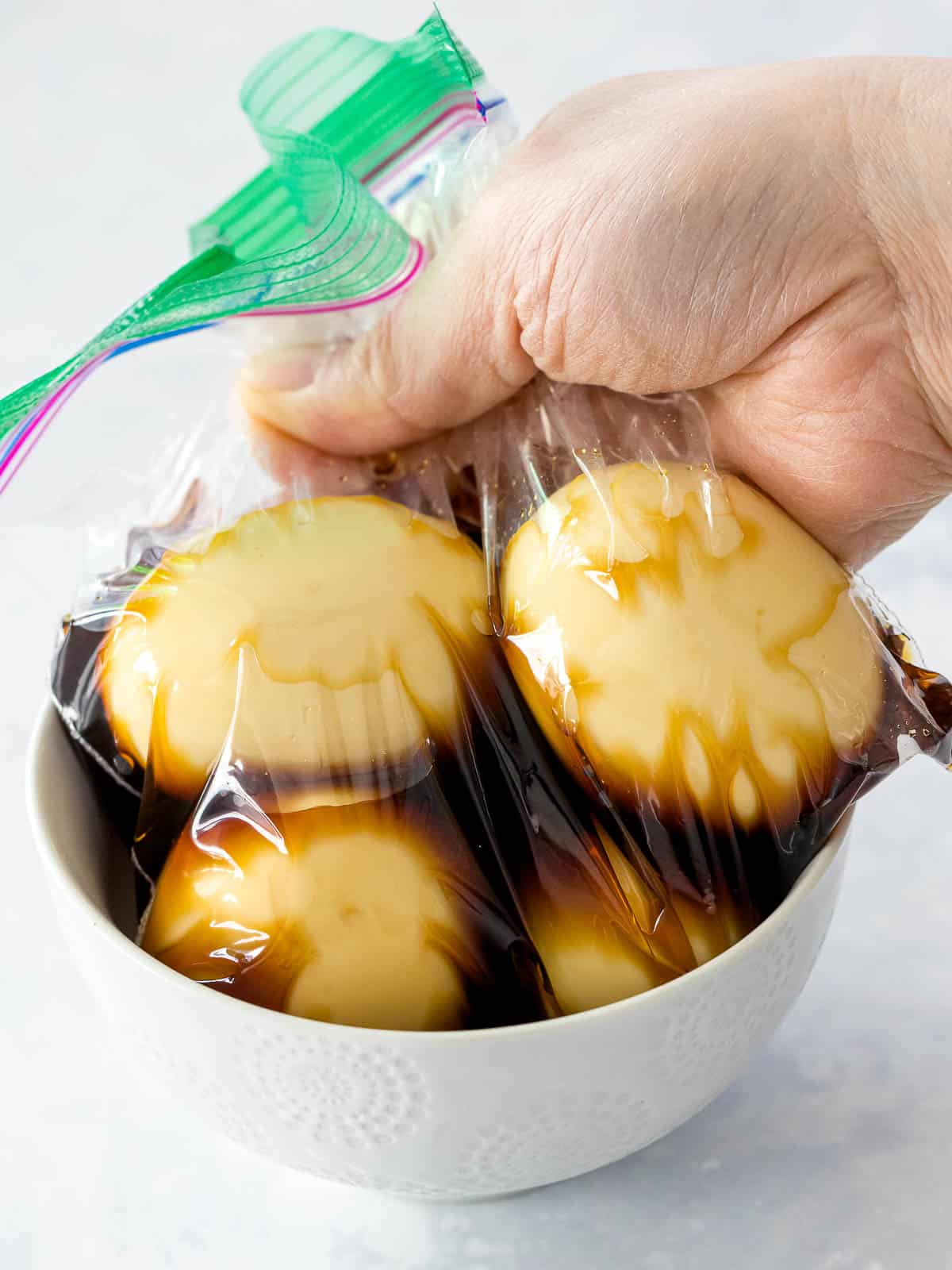
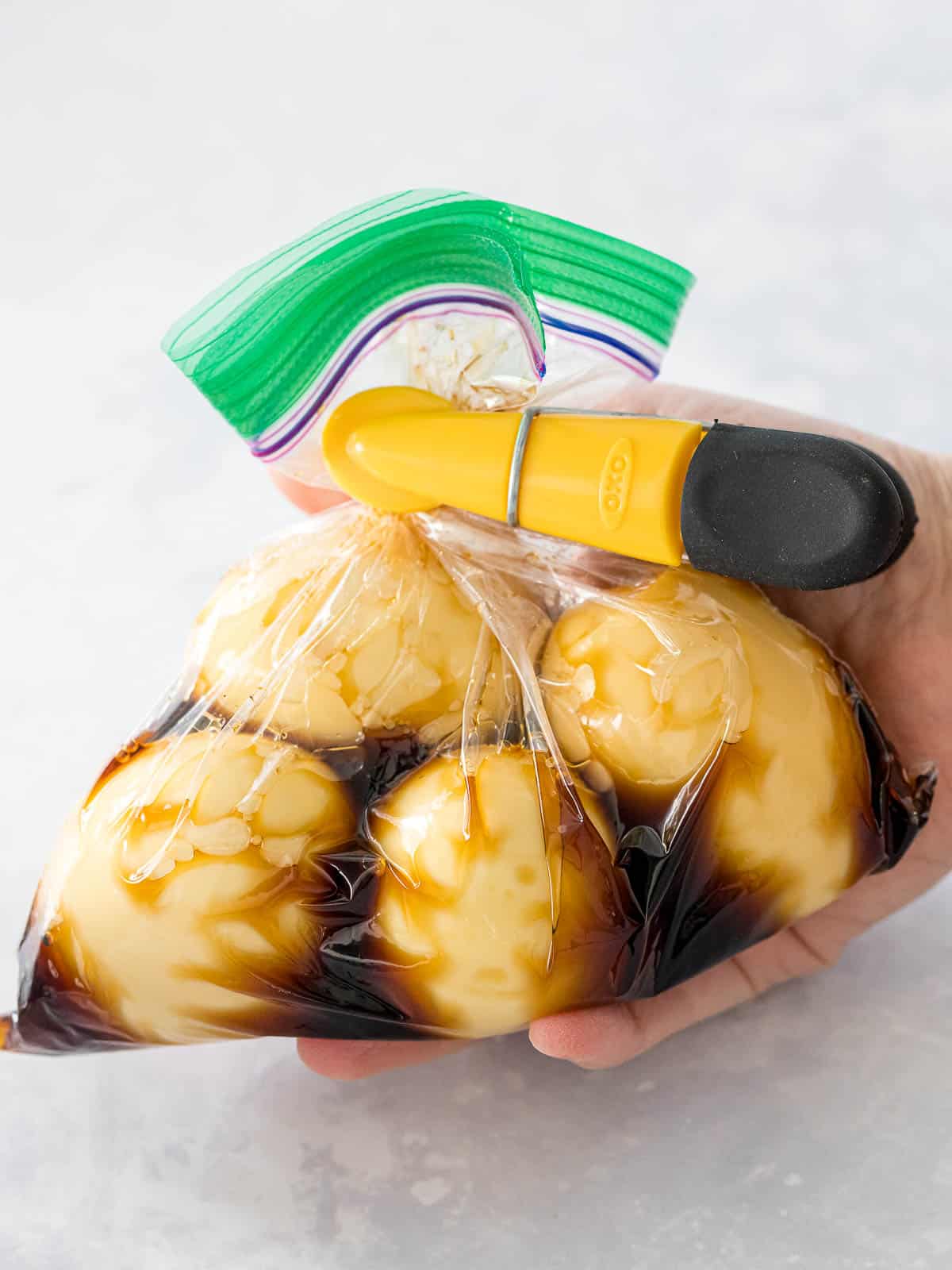
10. Marinate. Refrigerate for at least 1 hour and up to 3 days. They’re good after an hour but taste best the next day.
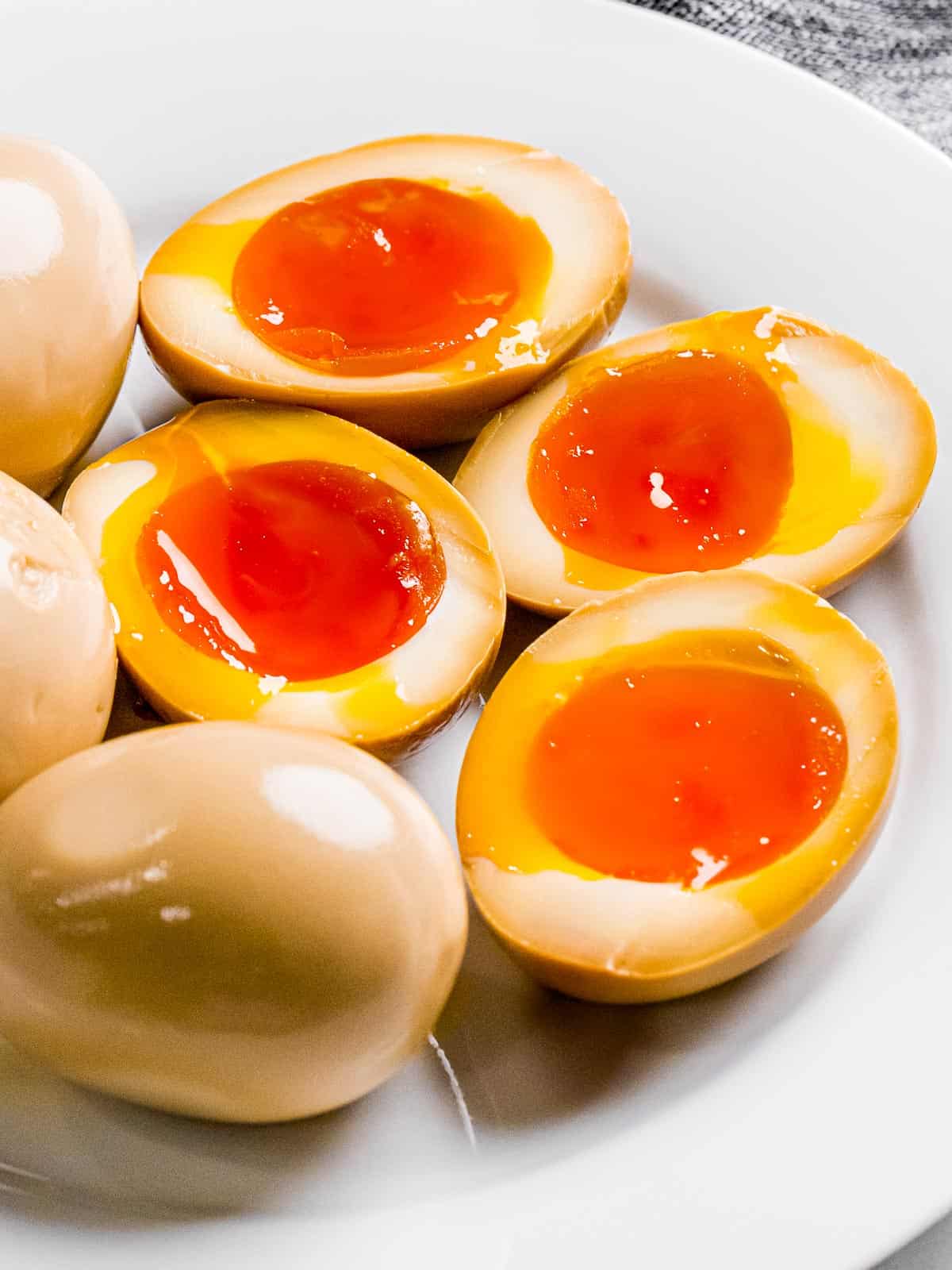
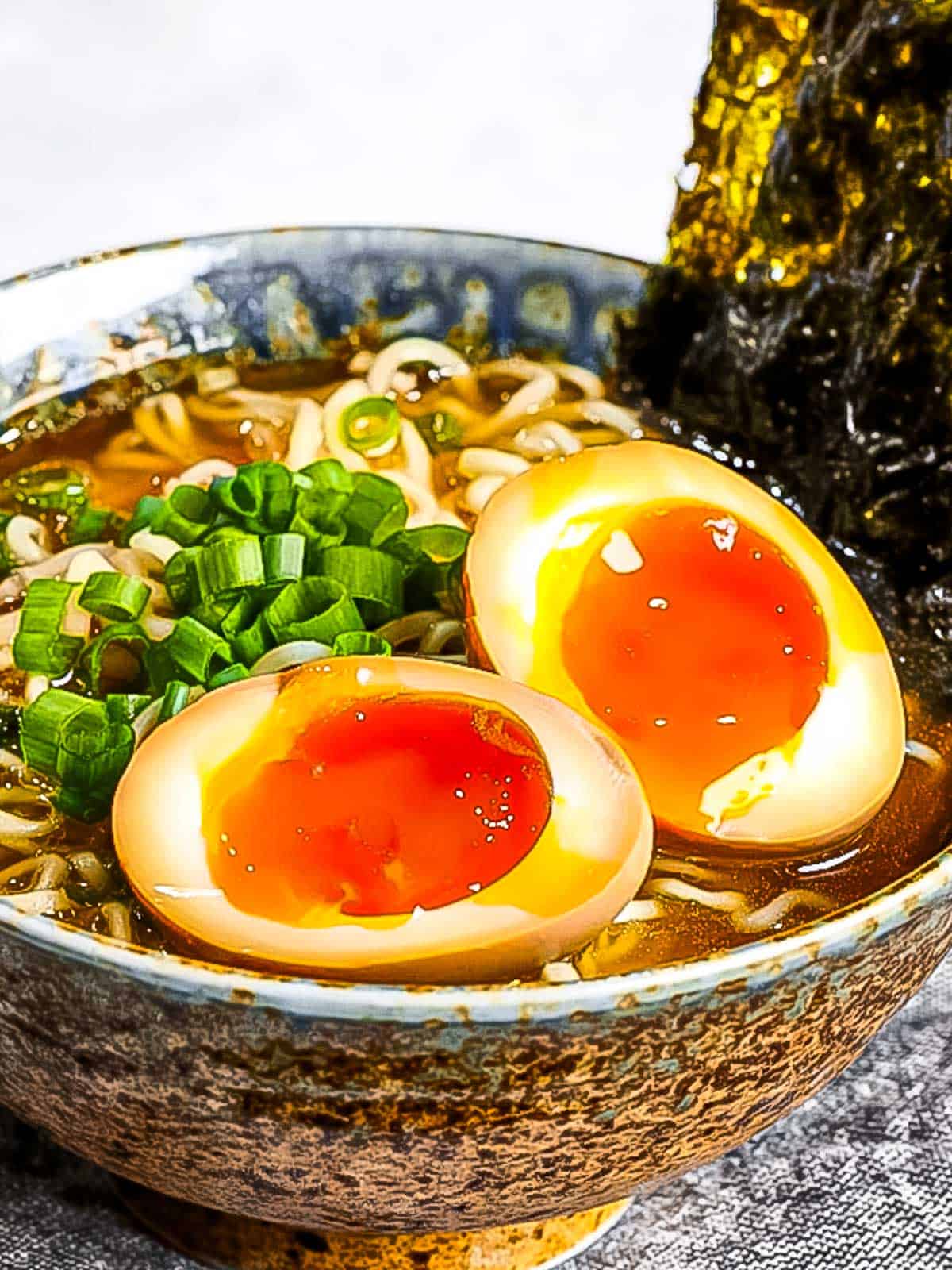
11. Serve. Slice in half and serve on ramen, rice bowls, or noodles.
Jamie’s Tip
Tips for Perfect Ramen Eggs
- Time by egg temperature, not just by clock. 7 minutes for cold eggs, 6 for room temperature. Cold eggs give you more predictable timing and keep the center of the yolk runny while the white sets. Room temperature eggs are less likely to crack because the temperature change is smaller.
- Use a pot large enough for a single layer of eggs. Crowding drops the water temperature and the whites may not set in time.
- Stir in one direction for 30 seconds. It’s a small step that keeps the yolks centered.
- Have the ice bath ready. The eggs keep cooking from residual heat until they’re chilled.
- Use older eggs if you can. They peel more easily than very fresh eggs.
- Peel with a spoon. Crack the shell all over first, then slide a spoon underneath.
- Wait a day if you can. The eggs are ready after an hour, but the flavor is better the next day.
How to Store Ramen Eggs
Store ramen eggs in their marinade in the fridge and eat them within 3 days.
- In the fridge: Keep them sealed in the bag or a covered container, submerged in the marinade. The soy flavor gets stronger each day.
- Why 3 days: Hard boiled eggs keep for about a week in the fridge, but soft boiled eggs have a shorter window. The yolk is left soft instead of cooked firm, so it doesn’t get the same safety margin, and peeling removes the shell that would otherwise protect the egg.
- Freezing: Not recommended; cooked egg whites turn rubbery when frozen.
- Serving: No need to reheat. Slice the eggs in half and set them right on your hot bowl of ramen, and the broth will warm them through. If you’d like them warmer, set the sealed bag in a bowl of warm (not boiling) water for a few minutes first.
Substitutions and Variations
- No mirin, non-alcoholic: Use water or stock with a pinch of sugar and a few drops of vinegar. Non-alcoholic mirin is also available.
- No mirin, with alcohol: Use half sake and half water, with a pinch of sugar.
- Ginger or garlic: Add a few slices of either to the marinade for extra flavor.
- Deeper color: Add the optional dark soy sauce. Leave it out and the eggs will be lighter but taste the same.
- Stock instead of water: Using stock in place of water makes the marinade, and the eggs, more savory.
Ways to Use Ramen Eggs
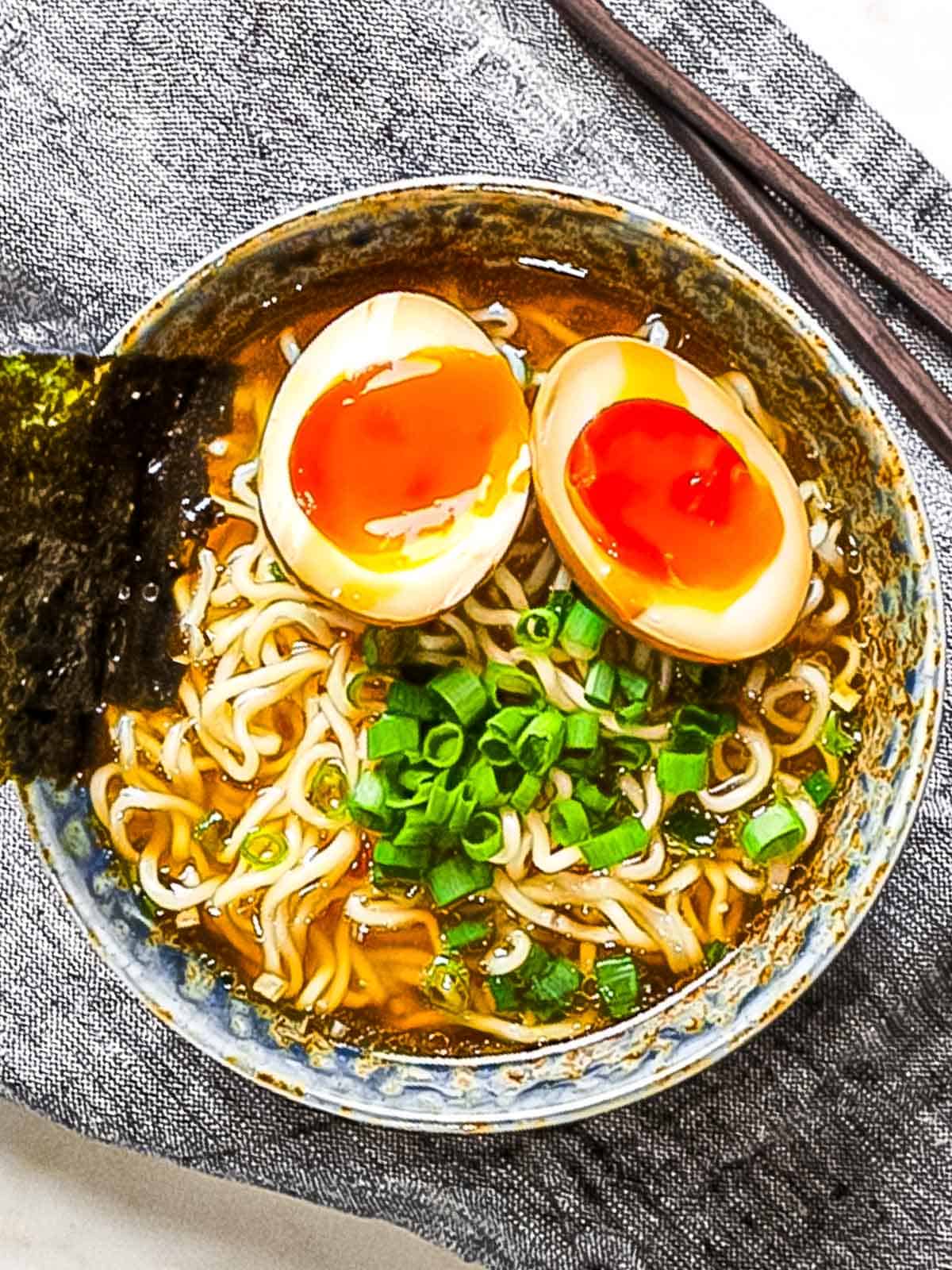
Ramen is the classic, but these eggs work anywhere you’d add a soft boiled egg.
- Ramen: Slice in half and set on top of a hot bowl.
- Noodles: Add a halved egg to Szechuan Chili Oil Noodles or Yaki Udon.
- Rice bowls: Set one over steamed rice with a sprinkle of homemade furikake.
- Salads: Halve over greens.
- Snack: Eat one straight from the fridge.
Frequently Asked Questions
Boil large eggs for 7 minutes if they’re cold from the fridge, or 6 minutes if they’ve been at room temperature for about 30 minutes. Move them straight into an ice bath when the timer goes off.
At least 1 hour, and up to 3 days in the fridge. They taste best the next day, and the soy flavor gets stronger the longer they sit.
Up to 3 days in the fridge, stored in the marinade.
Yes. Use water or stock with a pinch of sugar and a few drops of vinegar, or half sake and half water with a pinch of sugar. Mirin isn’t necessary to make delicious ramen eggs.
If you’d like to reuse it, boil and cool the marinade first. For the best flavor, though, I recommend making a fresh batch.
Stir the eggs gently in one direction for the first 30 seconds of boiling.
Very fresh eggs are harder to peel, so use slightly older eggs if you can. Add a tablespoon of vinegar to the boiling water, chill the eggs fully in ice water, then crack the shell all over and slide a spoon underneath.
Yes. Ramen eggs, soy sauce eggs, shoyu eggs, and ajitama (ajitsuke tamago) all refer to soft boiled eggs marinated in a soy-based mixture.
If you’re looking for more Japanese recipes, try my Japanese Egg Sandwich (Tamago Sando), 7-Minute Zaru Soba, or Crispy Chicken Katsu.
I hope you enjoy this recipe! Please share, rate, or comment below. I’d love to hear from you!
Thanks so much for stopping by!


Ramen Eggs (Soy Sauce Marinated Eggs)
Ingredients
- 6 eggs
- 1 Tablespoon vinegar, for easy peeling
Ramen Egg Marinade
- ½ cup water or stock
- 5 Tablespoons soy sauce
- 4 Tablespoons mirin, see Note 1 for substitutions
- 2 teaspoons dark soy sauce, (optional for deeper color)
Instructions
Soft Boil Eggs
- Prep: Fill a bowl with ice and water and set aside. Bring a large pot of water to a boil, large enough to hold the eggs in a single layer.
- Boil: Add the vinegar, then gently lower each egg into the pot. Set a timer for 6 minutes for room temperature eggs or 7 minutes for cold eggs from the refrigerator (see Note 2). Stir the eggs in one direction for the first 30 seconds for an even cross section.6 eggs, 1 Tablespoon vinegar
- Chill and peel: When the timer goes off, move the eggs to the ice bath to stop cooking. Once cooled, crack the shell all over and carefully peel by sliding a spoon between the egg and shell.
Marinate Eggs
- Marinate: Place a zip-top bag in a small bowl or cup to hold it upright. Add the water or stock, soy sauce, mirin, and dark soy sauce, if using. Gently add the eggs and squeeze the air out so the eggs are covered, adding more water or stock if needed. Twist and clip the bag closed.
- Chill: Refrigerate for at least 1 hour and up to 3 days.
- Serve: Cut in half and place on top of ramen noodles or rice bowls.
Notes
- Mirin substitutions: Mirin is a slightly sweet, slightly acidic Japanese rice wine. For a non-alcoholic substitute, use water or stock with a pinch of sugar and a few drops of vinegar. Or use half sake and half water with a pinch of sugar.
- Egg temperature: For room temperature eggs, leave them on the counter for 30 minutes before boiling. Cold eggs go straight from the fridge into the pot.
- Pot size: Use a pot large enough to hold the eggs in a single layer. If the pot is too small, the eggs lower the water temperature too much, and the whites won’t set in time.
- Marinating time: You can eat the eggs after 1 hour, but they taste best the next day.
- Storage: Keep leftover eggs in the marinade in the fridge for up to 3 days.
Nutrition
Nutrition information is automatically calculated, so should only be used as an approximation.
Like this? Leave a comment below!










I love the sandwich bag trick for marinating the eggs without needing to make extra marinade. I boil my eggs for a little over 7 minutes give or take and then soak them for at least 2 days. This makes the best ramen eggs!
Yes it’s a great way to save on marinade. Thanks for sharing Sara!
Where can you find alcohol free mirin?
Hi Mia! Have you tried on Amazon or specialty stores? In a pinch, you can use water with a pinch of sugar and a few drops of lemon juice since mirin is slightly sweet and sour.
I’m in the process of making this recipe. I boiled the eggs with the vinegar as directed, and then I peeled them (moment of truth) and to my GREAT surprise, they peeled perfectly. I tasted the marinade… delicious. Already 5 out of 5 for the egg peeling hack
That’s great to hear Rosie! Thanks for sharing!
When you say stock, would that be chicken or beef stock?
Hi Miriam! You can use any stock you’d like.
Can I use white wine vinegar instead of mirin?
Hi Hanna! I wouldn’t replace the entire amount of mirin with white wine vinegar because that would be too sour.
how long do the eggs last in the fridge? three days marinating + 3 days more in the fridge, or three days in total since the day of cooking?
thanks!
Hi miquel! I recommend consuming them within a week for the best flavor.
First time ever making ramen eggs, recipe was so easy and my eggs turned out so good! Thank you!
That’s great to hear Diana! Thank you!
Made them twice recently because the first batch turned out so good. Thank you!
Thanks for sharing Hannah! Glad you enjoyed it!
love how simple this recipe is! so good and so tasty!
Thank you Andrea!
Tried the first time a week or two ago, they were delicious!!!!!
Making a second batch as we speak, but now with double amount of the sauce so the eggs will be fully submerged in it.
Thanks Robert! So happy to hear that!
These eggs really are as perfect as they get! I had remembered loving them in Japan with my ramen, and have always wanted to recreate them at home. Thanks for the tip about cooking the eggs from cold to maintain that great yolk!
Thank you Claire! I’m so glad you found the recipe helpful!
Absolutely delicious! This is my go to ramen egg recipe! Thank you for sharing!
That’s so great to hear. Thank you Jodi!
Just curious where it says water or stock… What kind of stock do you use? I just got mirin and I’m excited to try this out!
Hi Erin! You can use any stock you’d like. 🙂
So simple and delicious! I’m never making ramen without these eggs again!
Thanks Alison! Yes, these eggs are a must have with ramen!
These eggs are perfect and definitely a must have for ramen. 🙂
Thanks Anita! Agreed, I can’t have ramen without these eggs!
Ended up with a perfectly cooked egg with a jammy yolk. Added it to a rice bowl but will try with ramen next time.
Ramen eggs in a rice bowl sound delicious. So happy to hear you ended up with perfect eggs!
Hey there— this may sound kind of goofy, but I just wanted to let you know that before I tried this recipe I had never boiled an egg before. These came out perfect. Paired them with a rice bowl with shrimp tempura. Just wanted to thank you.
Glad they turned out perfect Chris! Thanks for sharing!
What a great recipe!
Thanks Keri!
I have always wondered how to get hard boiled egg a different color and make it tasty! Glad i found your recipe and now I can make them! I’ll make it with ramen soup too
Thanks for sharing Mirlene!
First time making these soy sauce eggs..and they were so good. Made the ramen SO much better!
Yay I’m so glad to hear that Heather! Yes it’s a must have for ramen! 🙂