
As an Amazon Associate I earn from qualifying purchases. This post may contain affiliate links.
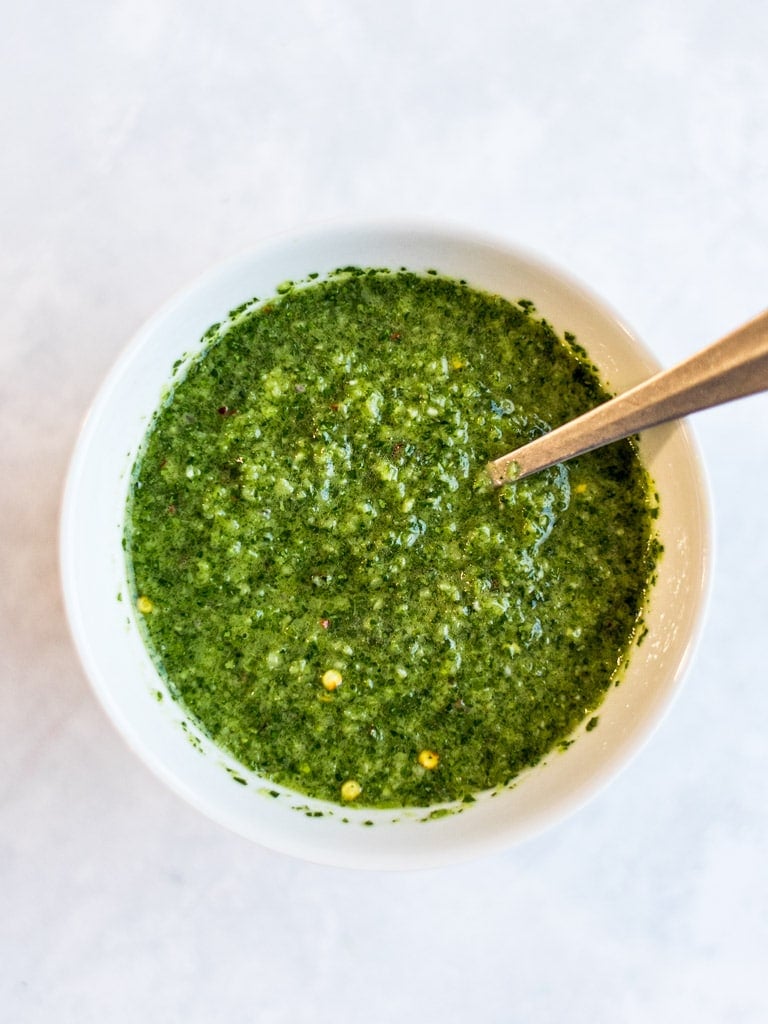
A bright, herb-packed chimichurri with an Asian twist: scallions, ginger, fish sauce, sesame oil, and a kick of chili. It all comes together in the food processor in about 15 minutes, ready to spoon over grilled meat, seafood, or roasted vegetables.
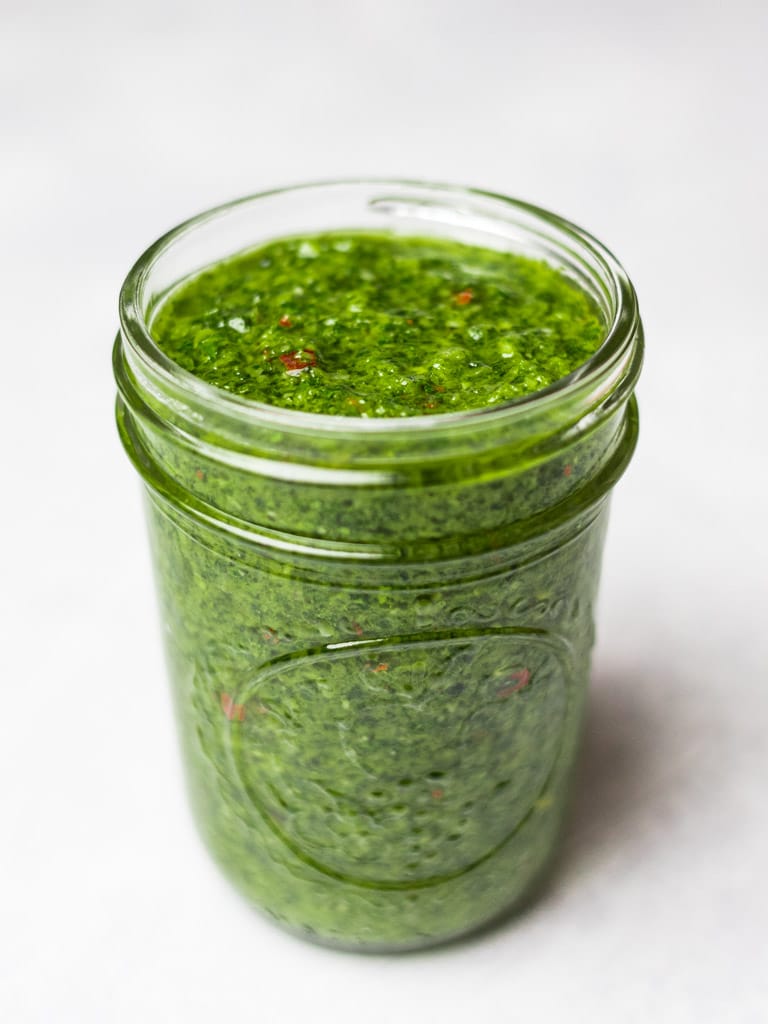
This spicy Asian chimichurri keeps everything you love about the classic Argentinian herb sauce (lots of fresh herbs, garlic, vinegar, and good olive oil) and pulls it toward the flavors I cook with most. Ginger, scallions, sesame oil, a splash of fish sauce, and chili give it a savory, spicy edge while the herbs still do the heavy lifting.
It takes about 15 minutes and one food processor, and it works on just about anything: grilled steak, salmon, shrimp, tofu, or a tray of roasted vegetables.
What Is Chimichurri?
Chimichurri sauce is a fresh herb sauce made primarily of parsley that originated from South America. It’s popular in Argentina and Uruguay and is used in cooking, grilling, as a marinade, and also as a condiment.
Traditional green chimichurri is made with parsley, garlic, oregano, red pepper flakes, vinegar, and olive oil. Some versions are red from added tomato or peppers, and plenty of cooks swap in other herbs like cilantro or basil.
What Makes This Chimichurri “Asian”?
The structure is the same (herbs, aromatics, acid, oil), but each part gets an Asian swap:
- Herbs: Cilantro, basil, and mint join the parsley for a brighter, more fragrant mix.
- Aromatics: Scallions, shallot, garlic, and fresh ginger.
- Acid: Rice vinegar instead of red wine vinegar.
- Savory depth: A teaspoon of fish sauce.
- Oil: Olive oil with a tablespoon of sesame oil for a nutty finish.
- Heat: Chili flakes, plus optional jalapeño and Thai chili.
If you like herby, punchy sauces, you might also like my Classic Vietnamese Dipping Sauce (Nước Chấm) or my Gochujang Sauce.
Ingredients You’ll Need
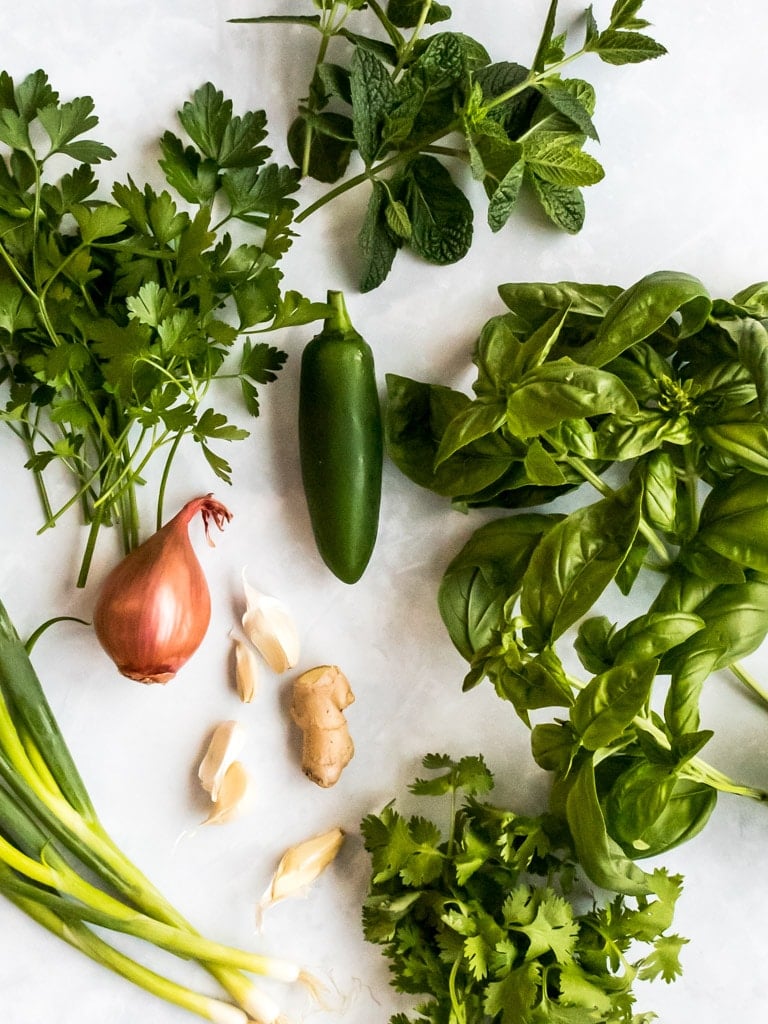
- Fresh herbs (1¾ cups total): parsley, cilantro, basil, and mint, tightly packed. Parsley and cilantro stems are fine to include.
- Aromatics: scallions, shallot, garlic, and fresh ginger.
- Chili: dried chili flakes, plus an optional jalapeño and Thai chili for more heat.
- Rice vinegar: for clean, mild acidity.
- Fish sauce: optional; soy sauce or a little extra salt works instead.
- Oils: olive oil and sesame oil.
- Salt: to taste.
Full amounts are in the recipe card below.
How to Make Spicy Asian Chimichurri Sauce
1. Prep the aromatics and herbs. Measure out your herbs, packing them tightly into the cup. Peel the ginger, then give the scallions, shallot, garlic, ginger, and any fresh chilies a rough chop so they break down evenly in the food processor. Leave the seeds in the jalapeño for full heat, or remove them if you want a milder sauce.
2. Add everything except the olive oil to the food processor. That includes the herbs, aromatics, chili flakes, rice vinegar, fish sauce, and sesame oil. Holding back the olive oil lets you chop the herbs first without turning them into a slick puree.
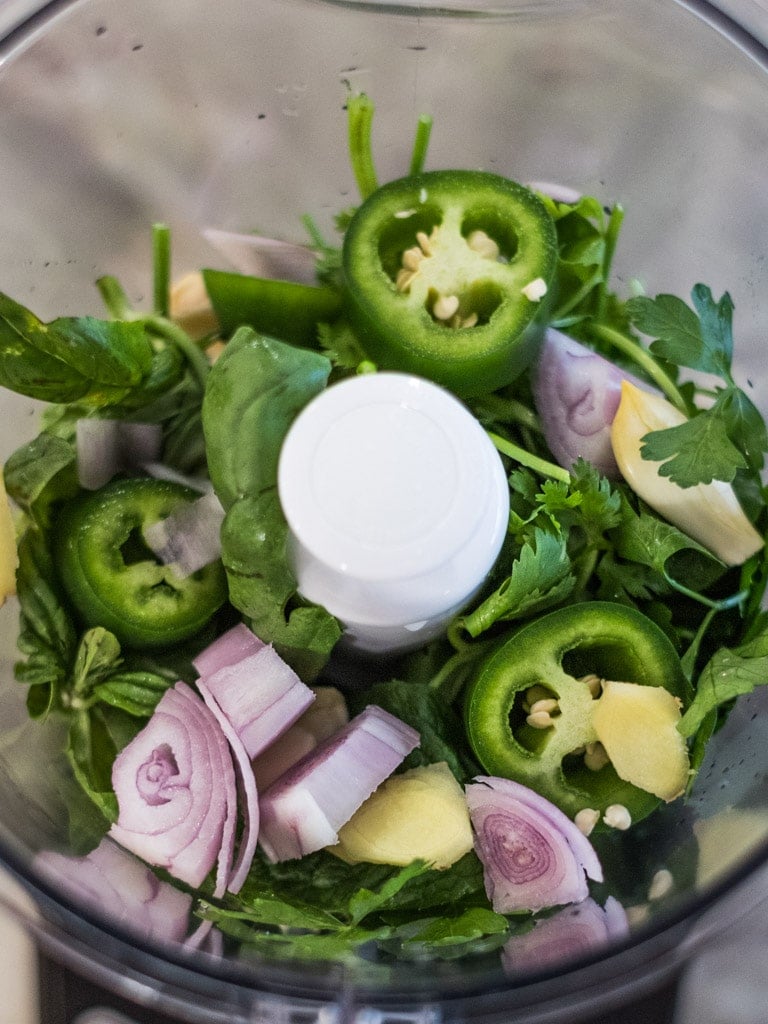
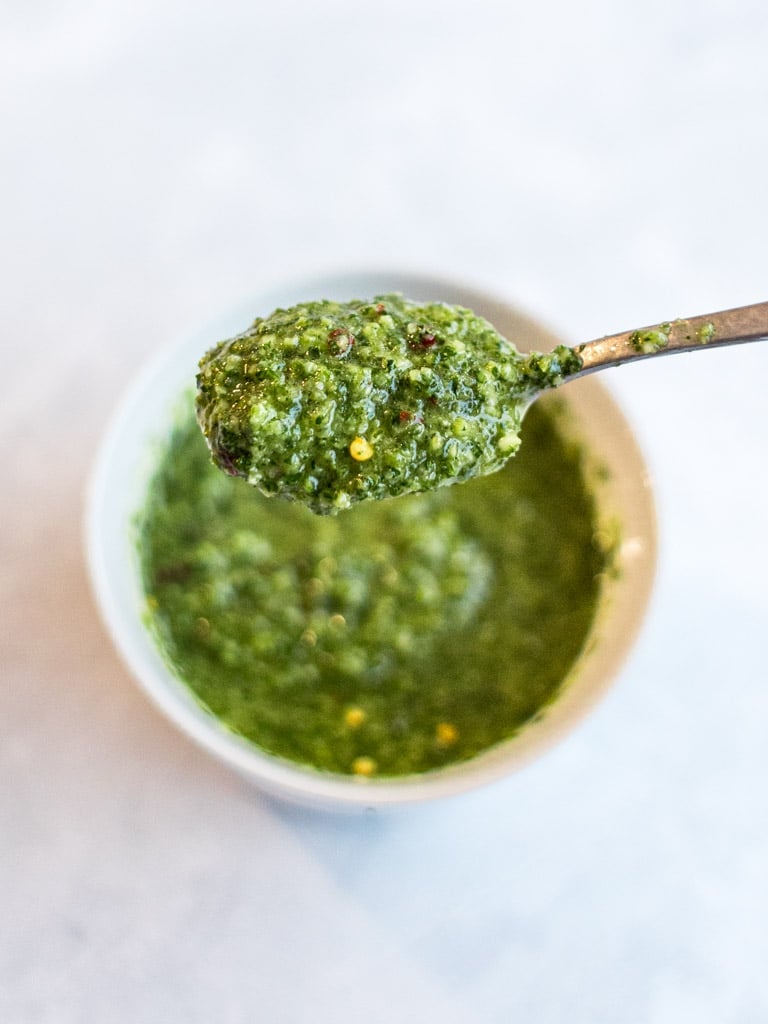
3. Pulse until coarsely chopped. A few short pulses are all it takes. You want small, visible pieces of herb, not a paste.
4. Drizzle in the olive oil. With the processor pulsing, slowly pour in the olive oil and pulse a few more times until it’s combined.
5. Season and serve. Taste and add salt as needed. Spoon over your favorite protein or grilled vegetables.
Jamie’s Tip
Tips for the Best Asian Chimichurri (H2)
Pack the herbs tightly. The 1¾-cup measure assumes firmly packed herbs, so a loose cup will give you a thinner, oilier sauce.
Rough chop the aromatics first. Smaller pieces of scallion, shallot, garlic, ginger, and chili break down evenly with just a few pulses.
Don’t over-process. Pulse rather than run the machine so the herbs stay coarse.
Build the heat in layers. The chili flakes give a baseline kick. Add the jalapeño, the Thai chili, or both if you want it truly spicy, and seed the jalapeño to take the edge off.
Use your stems. Tender parsley and cilantro stems add flavor and reduce waste.
Variations and Substitutions
- Swap the herbs: Use any combination of fresh herbs that adds up to 1¾ cups.
- No fish sauce: Use soy sauce, or just add a little more salt.
- Milder: Seed the jalapeño, or skip the jalapeño and Thai chili and keep just the chili flakes.
- Reader favorites: Chives in place of scallions, red onion in place of shallot, and a splash of lime juice with the rice vinegar.
How to Serve It
- Spooned over grilled or seared steak, chicken, pork, or fish
- As a marinade for meats, seafood, and vegetables
- Over roasted or grilled vegetables
- Alongside rice with fish, like a reader who served it with yellowtail
Frequently Asked Questions
It keeps the classic herb, garlic, vinegar, and oil base but adds scallions, ginger, sesame oil, fish sauce, rice vinegar, and chili.
It’s adjustable. The chili flakes give it a moderate kick on their own. Add the jalapeño, the Thai chili, or both for more heat. Seed the jalapeño if you want it milder.
Yes. Use soy sauce instead, or simply add a bit more salt.
Yes. Any combination of fresh herbs that adds up to 1¾ cups, tightly packed, will work.
It has a very herbaceous flavor, so if you like that with spring rolls, it’s a great match. For more traditional options, try my 3 Classic Spring Roll Dipping Sauces.
Yes, it works as a marinade for meat, seafood, and vegetables.
Up to 3 days in an airtight container in the fridge.
If you make this spicy Asian chimichurri, leave a rating and tell me in the comments how you used it and which herbs you went with! Readers have shared some great swaps already, and I love seeing new ones. Need another sauce for the grill? My Gochujang Sauce is a great next one to try.
Spicy Asian Chimichurri Sauce
Ingredients
- 3 stalks scallions, roughly chopped
- ½ medium shallot, roughly chopped
- 3 cloves garlic, roughly chopped
- 1 inch ginger, peeled and roughly chopped
- ½ teaspoon dried chili pepper flakes
- 1⅔ Tablespoons rice wine vinegar
- 1 teaspoon fish sauce, optional; can substitute with soy sauce or add more salt
- 1 jalapeno, optional for spice
- 1 Thai chili pepper, optional for spice
- salt to taste
Fresh Herbs – total 1¾ cups
- ½ cup parsley, tightly packed (stems can be included)
- ½ cup cilantro, tightly packed (stems can be included)
- ½ cup basil, tightly packed
- ¼ cup mint leaves, tightly packed
Oils
- ⅔ cup olive oil
- 1 Tablespoon sesame oil
Instructions
- Add all the ingredients except the olive oil to a food processor.
- Pulse a few times until everything is coarsely chopped.
- Slowly drizzle in the olive oil while pulsing a few more times, until the olive oil is combined.
- Add salt to taste. Serve with your favorite protein or spoon over grilled vegetables.
Notes
- Herbs: Any combination of fresh herbs works, as long as it adds up to 1¾ cups tightly packed.
- Spice level: The chili flakes give a baseline heat. Add the jalapeño and Thai chili for more. Seed the jalapeño if you want to tone it down.
- Fish sauce: Substitute soy sauce, or add a little more salt.
- Yield: Makes about 1½ cups.
- Storage: Keep in an airtight container in the fridge for up to 3 days.
Nutrition
Nutrition information is automatically calculated, so should only be used as an approximation.
Like this? Leave a comment below!


How long will this last in cupboard or fridge? I have an abundance of mint and basil in my garden and would like to make something that will last until next year. Any suggestions would be helpful.
Would this Chimichurri Sauce be suitable for spring rolls?
Thank you.
Hi Barbara! Chimichurri has a really herbaceous flavor so if you like that with spring rolls, I think it would be great. Otherwise, you can check out my recipe for spring roll dipping sauces here: https://drivemehungry.com/3-classic-spring-roll-dipping-sauces/
Current favourite recipe! It is easy and adds so much depth of flavour – I mean, imagine a plain piece of chicken and then imagine it with this sauce! It really is so good – I have told so many friends about your website!
We loved this twist on the chimichurri!! We added the jalapeno for extra kick, and served it over some grilled meat. It was so good – the freshness of the herbs and the spice from the chilli worked so well together!
OMG! I made as directed except I used homegrown chives instead of green onions and red onion instead of shallot because those are what I had on hand. I also added a tablespoon or so of bottled key lime juice in addition to the rice vinegar and it added such a wonderful flavor I wouldn’t make this again without it. I also didn’t add basil because I didn’t have any though I imagine it would be wonderful, and I used wild foraged mint. I also used salt substitute instead of regular salt since I’m on a low sodium diet. Came out absolutely fantastic. I served it with yellowtail steaks and pearl rice and it went really well with both. I bookmarked your recipe and will definitely make it again and again. Thank you!
Hi Lilly! I’m so glad you liked it! Those are all great additions/substitutions for this recipe. That’s what’s so great about chimichurri sauce isn’t it? It’s so versatile and can be made with so many different herbs and spices. 😀
What a vibrant and delicious colour! Can’t wait to give this a try 🙂
Thanks Alex! Yes I love the color too! Hope you like it!
Made this chimichurri sauce tonight and served with roasted vegetables. I just loved it!!! Thanks for sharing.
That’s great to hear Irina! So glad you loved it! 😀
This recipe is so green and gorgeous! Beautiful job!
Thank you so much Genevieve!
I love this spicy version of chimichurri!! Great recipe
Awesome to hear Noelle! So glad you love it!
What a great twist on one of my favorite sauces. I almost always have some kind of chimichurri in the fridge and I can’t wait to try this spicy asian twist.
Thank you Kelly! It’s quickly becoming one of my favorite sauces too!
This sauce sounds amazing. I know my husband will love it!