
As an Amazon Associate I earn from qualifying purchases. This post may contain affiliate links.

A light, clear stir-fry sauce built on stock, garlic, and ginger, thickened with cornstarch in about 6 minutes.

Chinese white sauce is the mild, glossy sauce in dishes like moo goo gai pan, shrimp with vegetables, and stir-fried greens. Unlike brown sauce, it skips soy sauce, so the stock, garlic, and ginger carry the flavor and the vegetables keep their color.
It is also the sauce I use in my moo goo gai pan. One batch makes about 3 cups, enough for several stir-fries, and it is vegan when you use vegetable stock.
RECIPE AT A GLANCE
What it is: A clear, mild Chinese stir-fry sauce made from stock, garlic, ginger, Shaoxing wine, and toasted sesame oil, thickened with a cornstarch slurry.
Why it works: The cornstarch is mixed into a little of the stock first, so it disperses without lumps when it hits the boiling pot. You pull the sauce off the heat as soon as it turns clear, then give it only 30 seconds to a minute in the stir-fry. That short finish matters, because cornstarch sauces thin out again with long heating and hard stirring.
Time: 2 minutes prep, 4 minutes cook, 6 minutes total. Makes about 3 cups.
Make-ahead and storage: Refrigerate in an airtight container for up to 3 days. It sets into a gel when cold and melts back into a sauce in a hot pan. To freeze, leave out the cornstarch and add a fresh slurry when you cook.
Serve with: Moo goo gai pan, shrimp or scallop stir-fries, chicken and vegetables, or stir-fried bok choy, all over steamed rice.
Make it a brown sauce: Stir in soy sauce, oyster sauce, and chili sauce.
Vegan and gluten-free: Vegan with vegetable stock. For gluten-free, swap the Shaoxing wine for dry sherry and check your stock label.
Table of Contents
Why You’ll Love This Recipe
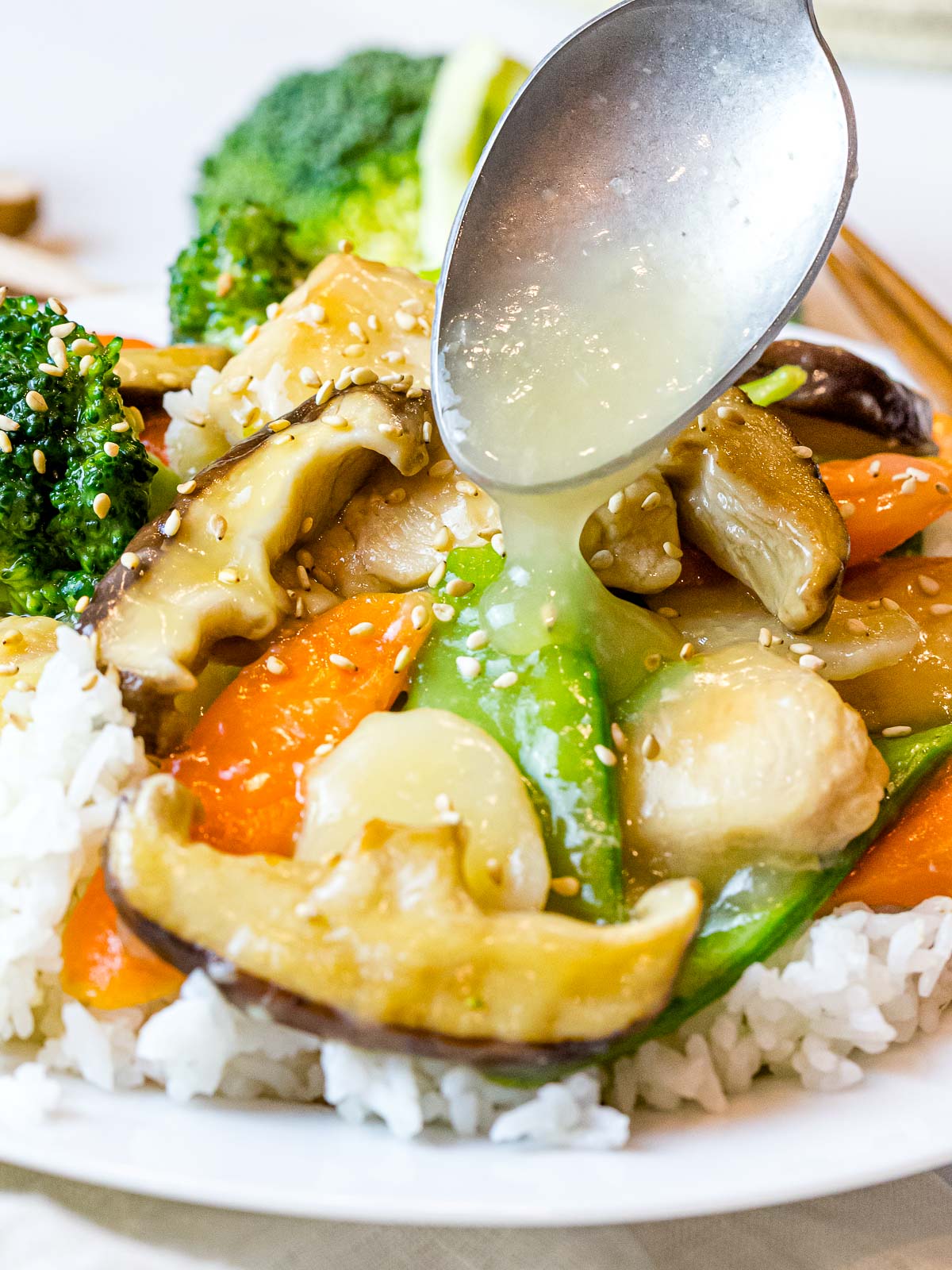
- One sauce, a whole week of dinners. A single batch can become moo goo gai pan one night, shrimp and snow peas the next, and garlicky bok choy after that. Swap the protein and vegetables, and the sauce does the rest.
- Done in about 6 minutes. You need one saucepan and a handful of pantry staples you likely already have.
- Lets your ingredients shine. It’s mild and clear, so vegetables keep their bright color and delicate proteins like shrimp and chicken aren’t buried under a heavy sauce.
- Easy to adapt. Make it vegan with vegetable stock, gluten-free with dry sherry instead of Shaoxing wine, or stir in soy sauce, oyster sauce, and chili sauce to make a brown sauce.
- Made for meal prep. It keeps for 3 days in the fridge, and the cornstarch-free base can go in the freezer.
Ingredient Notes

- Stock. Use any clear stock you like. It’s the main ingredient in this sauce, so its flavor will come through the most. Choose a plain stock without added herbs or spices; many store-bought stocks are seasoned for Western cooking. Low-sodium stock gives you control over the salt, so taste before adding the full teaspoon. Use vegetable stock for a vegan sauce.
- Cornstarch. This is what gives the sauce its glossy, clear finish. It starts cloudy and turns clear once it has cooked enough, which is your cue to turn off the heat. Always mix it into cool or room-temperature liquid first; added straight to hot stock, it clumps.
- Shaoxing wine. Adds a fragrant, slightly sweet depth. Mirin or another cooking wine works in its place. Shaoxing wine contains a small amount of wheat, so it is not gluten-free; use dry sherry instead for a gluten-free sauce.
- Garlic and ginger. Fresh garlic adds a sharp, spicy bite with subtle bitter notes, and ginger adds a warm, bright note. Together, they keep the sauce from tasting flat. Grating the ginger helps it blend smoothly into the sauce, so its flavor spreads evenly instead of coming in sharp bites. For a punchier sauce, add an extra clove of garlic or a little more ginger.
- Salt. Add the salt last, since stock sodium varies so much by brand.
How to Make Chinese White Sauce
1. Make the slurry. In a small bowl, whisk the cornstarch with 1/4 cup of the stock until smooth with no lumps. Set it aside.
2. Season the stock. In a saucepan, combine the remaining stock with the Shaoxing wine, sesame oil, garlic, ginger, salt, and sugar. Bring it to a boil over medium-high heat. The aromatics infuse the stock as it heats, so there’s no separate sauté step.


3. Stir in the slurry. Re-stir the slurry right before using it, as the cornstarch may settle to the bottom of the bowl. Pour it in slowly while stirring the pot.
4. Cook until clear, then stop. Keep stirring until the sauce thickens and turns from cloudy to clear. Turn off the heat right away, then taste and adjust the salt.

Jamie’s Tip
Tips for the Best Chinese White Sauce
- Add the slurry gradually. Pour in about three-quarters of it, let the sauce cook for 15 to 20 seconds, then check the thickness before adding the rest.
- Don’t keep cooking once it’s clear. Long heating and vigorous stirring after the sauce thickens break down the swollen starch, and the sauce turns thin again.
- Sauce goes in last. Finish cooking your protein and vegetables first, then add the sauce for just 30 seconds to 1 minute to coat everything.
- Season after it thickens. Taste once the sauce is clear and adjust the salt then, because stock brands vary widely in sodium.
- Fixing the thickness. Too thick? Whisk in a splash of stock, a little at a time, until it loosens. Stock keeps the flavor better than water. Too thin? Mix a small amount of cornstarch with cold stock or water, stir it in, and cook just until it turns clear again. Add it gradually, since it’s easier to thicken more than to thin back down. The same small slurry fixes sauce that loosens after reheating.
Ways to Use Chinese White Sauce
White sauce suits ingredients with delicate flavor that you don’t want to bury: chicken, seafood, tofu, and vegetables. When adding it to a stir-fry, add it toward the end, after your protein and vegetables are fully cooked. You only need 30 seconds to 1 minute for the sauce to coat the ingredients.

- Moo goo gai pan. The classic. Sliced chicken and mushrooms with vegetables; see my moo goo gai pan recipe.
- Seafood stir-fries. Shrimp or scallops with snow peas or broccoli.
- Chicken and vegetables. Chicken with broccoli, or any mix of what’s in your crisper drawer.
- Stir-fried greens. Bok choy, gai lan, or choy sum, finished with a spoonful of sauce.
- Tofu and vegetables. Use the vegetable stock version for a fully vegan stir-fry.
- Over rice or noodles. Spoon it over steamed rice or noodles with simple toppings.
How Much Sauce Per Stir-Fry
Use about ¾ cup for every 8 ounces of protein and 3 to 4 cups of vegetables. That’s the same ratio I use in my moo goo gai pan: 1 1/2 cups sauce for 1 pound of chicken and about 8 cups of vegetables for 4 servings. A full batch of this white sauce (about 3 cups) covers two of those stir-fries, or four smaller ones made with 8 ounces of protein each.
Chinese White Sauce vs. Brown Sauce
The difference is soy sauce. White sauce leaves it out, so it stays light in color and milder in flavor, while brown sauce is built on soy sauce for a bolder, darker result.
White sauce is built on stock, garlic, ginger, and sesame oil. It’s clear to pale in color, with a mild, delicate flavor that lets the other ingredients lead. It pairs best with chicken, seafood, tofu, and vegetables, in dishes like moo goo gai pan and shrimp with vegetables.
Brown sauce adds light and dark soy sauce to the stock, and sometimes oyster sauce, hoisin, or five spice. It’s deep brown, with a bold, savory, salty flavor that stands up to beef, lamb, duck, and heartier dishes like beef and broccoli or pepper steak.
You can turn this white sauce into a brown sauce by stirring in soy sauce, oyster sauce, and chili sauce.
How to Store Chinese White Sauce

Refrigerator: Cool the sauce, then store it in an airtight container or jar for up to 3 days. It sets into a soft gel as it chills. That’s normal; it melts back into a pourable sauce in a hot pan.
Freezer: For longer storage, make the sauce without the cornstarch and freeze the seasoned stock. Freezing and thawing after adding the cornstarch can cause the sauce to thin out. When you’re ready to cook, bring it to a boil and stir in a fresh slurry.
Variations
- Brown sauce: Use this as a base for other stir-fry sauces. Add flavorings like soy sauce, oyster sauce, and chili hot sauce to turn this into a flavorful brown sauce.
- Restaurant-style: Add a pinch of ground white pepper, a little minced scallion white, and MSG if you like it. A small amount of oyster sauce (or vegetarian mushroom oyster sauce) adds savory depth while keeping the color light.
- With heat: For subtle spice, add a few peppercorns or whole dried chili peppers to the stock.
- Other aromatics: Garlic and ginger are the most common aromatics to use, but you can also add lemongrass, scallions, leeks, or onions.
Frequently Asked Questions
Stock, garlic, ginger, Shaoxing wine, toasted sesame oil, salt, and a little sugar, thickened with cornstarch. It has no soy sauce, which is why it stays clear.
Brown sauce is built on soy sauce and is darker and bolder. White sauce skips the soy sauce and lets the stock, garlic, and ginger lead, so it pairs best with chicken, seafood, and vegetables.
You can add this to any stir-fry, and it would taste delicious! Traditionally, this clear Chinese white sauce is used in moo goo gai pan, which is a mushroom chicken stir-fry with vegetables.
When adding this sauce to a stir-fry, add it at the very end, after the protein and vegetables are fully cooked. It only takes a minute to warm up the sauce and coat your ingredients.
It’s vegan when you use vegetable stock. As written, it is not gluten-free because Shaoxing wine contains a small amount of wheat. For a gluten-free sauce, swap in dry sherry and use a stock labeled gluten-free.
About ¾ cup for every 8 ounces of protein and 3 to 4 cups of vegetables.
Up to 3 days in an airtight container in the fridge. For longer storage, freeze the sauce without the cornstarch and add a fresh slurry when you cook. Freezing and thawing the sauce after the cornstarch has been added can cause it to thin out.
Usually, it was cooked too long after thickening or stirred too hard for too long. Both break down the cornstarch. Turn off the heat as soon as the sauce turns clear, and only give it a minute in the stir-fry.
The cornstarch hasn’t finished cooking. Keep stirring over the heat until it turns clear.
Once you have a jar of this white sauce in the fridge, a takeout-style stir-fry is mostly chopping. Start with my moo goo gai pan, then try it with shrimp, tofu, or whatever greens you have. If you make it, let me know in the comments what you paired it with, and leave a rating so other readers can find it.
More Sauces and Stir-Fries to Try:
- Moo Goo Gai Pan – Quick and Easy!
- 3 Classic Spring Roll Dipping Sauces
- Sweet and Tangy Sticky Soy Glaze
- Panda Express Mushroom Chicken Copycat
- Panda Express Kung Pao Chicken Copycat
- Chicken Chow Mein with Vegetables – Better than Takeout!
- Panda Express String Bean Chicken Breast Copycat
- Easy Japchae (Korean glass noodle stir fry)

Chinese White Sauce
Ingredients
- 3 cups chicken or vegetable stock, plain, low-sodium recommended
- 3 ½ Tablespoons cornstarch
- 1 Tablespoon Shaoxing wine, or mirin, cooking wine, or dry sherry for gluten-free
- 1 Tablespoon toasted sesame oil
- 4 cloves garlic, minced
- 1 teaspoon ginger, grated
- 1 teaspoon sea salt
- ½ teaspoon sugar
Instructions
- In a small bowl, whisk the cornstarch with ¼ cup of the stock until smooth. Set aside.
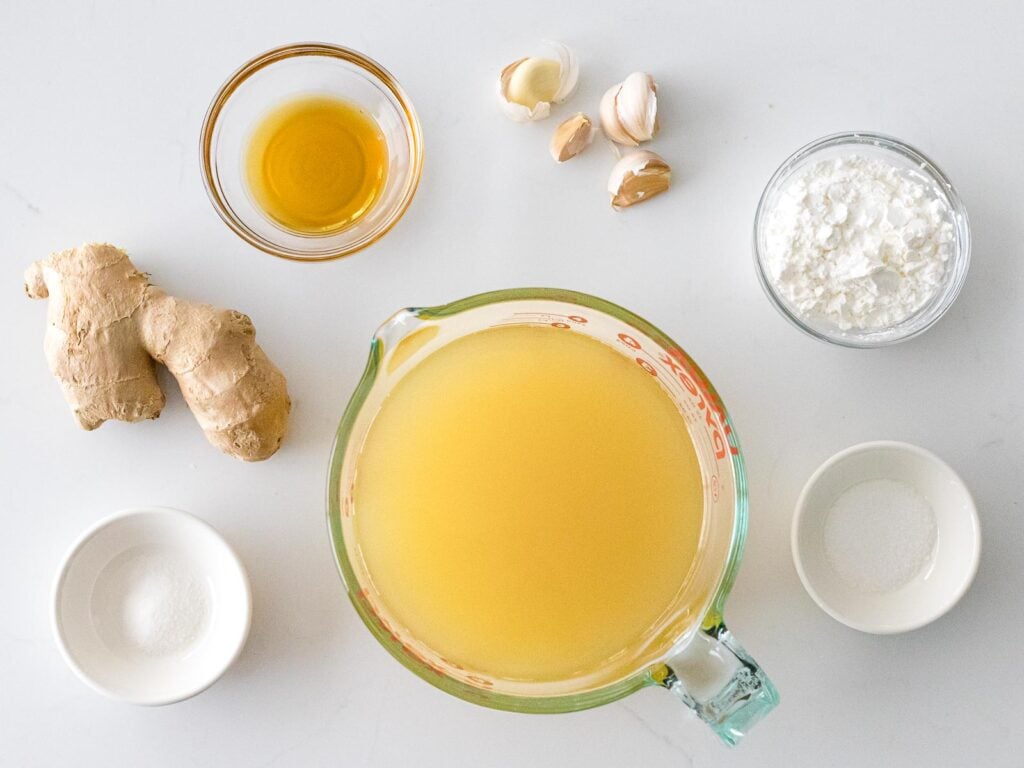
- In a saucepan, combine the remaining stock, Shaoxing wine, sesame oil, garlic, ginger, salt, and sugar. Bring to a boil over medium-high heat.

- Re-stir the slurry, then slowly pour it into the boiling stock while stirring.

- Once the sauce thickens and turns clear, turn off the heat. Taste and adjust the seasoning.

Notes
- Yield: Makes about 3 cups.
- Using it: Add the sauce at the end of a stir-fry, once the protein and vegetables are cooked. Cook for 30 seconds to 1 minute, just until it coats; cooking longer can thin it.
- Brown sauce: Stir in soy sauce, oyster sauce, and chili sauce to taste.
- Vegan and gluten-free: Use vegetable stock for vegan. Shaoxing wine contains wheat; use dry sherry and a gluten-free stock for gluten-free.
- Storage: Refrigerate in an airtight container up to 3 days. It gels when cold and melts in a hot pan.
- Freezing: Leave out the cornstarch, freeze the seasoned stock, and add a fresh slurry when cooking.
Nutrition
Nutrition information is automatically calculated, so should only be used as an approximation.
Like this? Leave a comment below!



This came out great! I used chicken broth, may go with vegetable next time. I added it to chicken with broccoli and will make it a little thicker next time. Thanks for sharing!!
OMG, this sauce is amazing!!!!
This worked so well. I was wondering if I could freeze the sauce? I love to meal prep as much as possible.
Thanks Brit! I’d advise against freezing once the sauce is thickened with cornstarch as it can thin out if frozen and thawed. If you like to freeze this, I recommend using arrowroot starch as it has better results. Or you can simply mix together all the ingredients ahead of time but leave out the cornstarch. Then when you’re ready, bring it to a simmer and add the cornstarch. Hope that helps!
Hi Jamie,
This was absolutely delicious in the moo goo gai pan. Honestly, I was so excited at how it tasted. You are going to save me a fortune on take out!
Thanks again, Linda