
As an Amazon Associate I earn from qualifying purchases. This post may contain affiliate links.

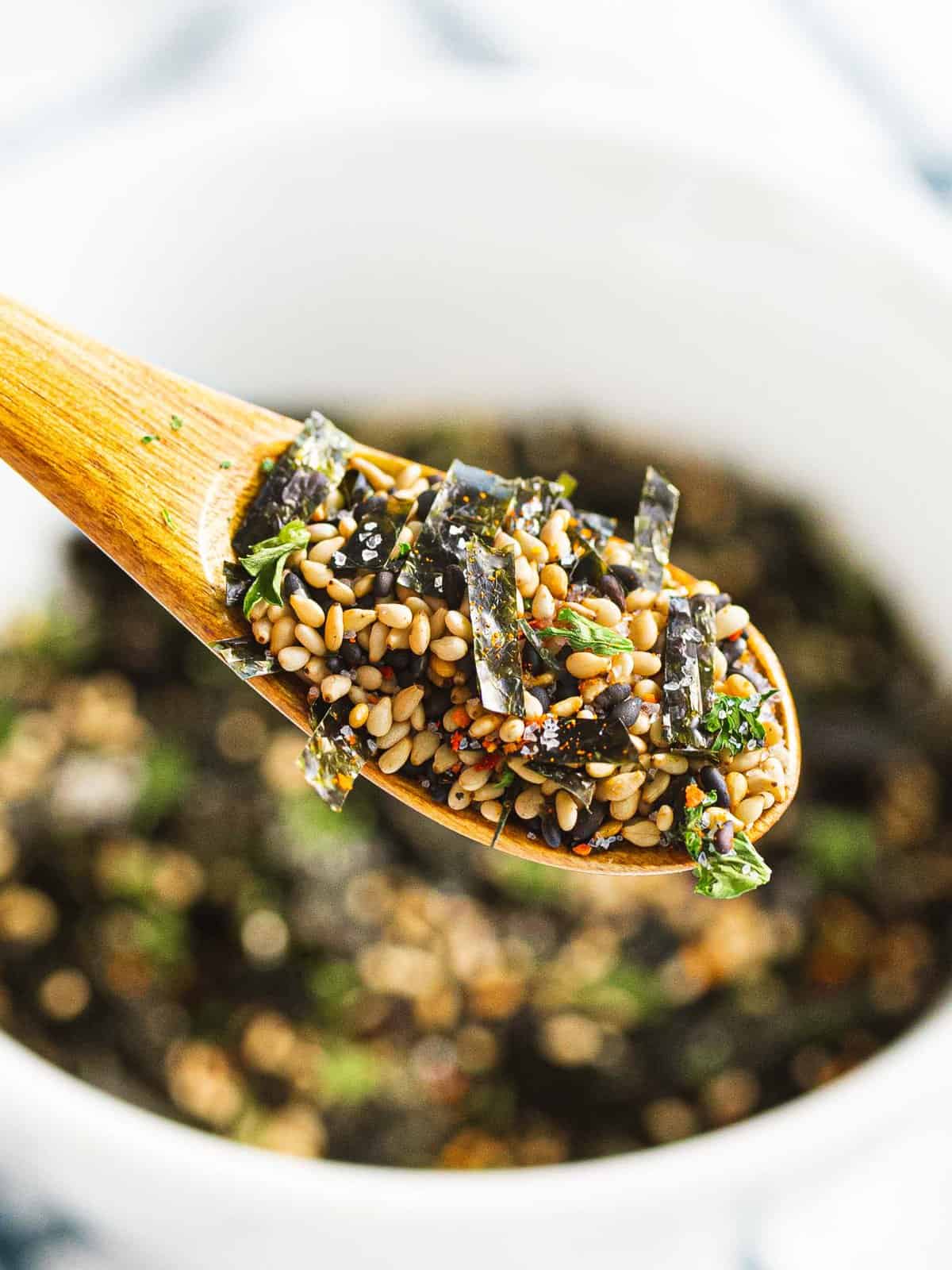
This homemade furikake (Japanese rice seasoning) includes nori (seaweed), toasted black and white sesame seeds, salt, and sugar for a simple and easy basic furikake known as ‘nori komi furikake’. Sprinkle this on steamed rice, udon noodles, onigiri, ramen, popcorn, and more to easily add flavor to any dish!
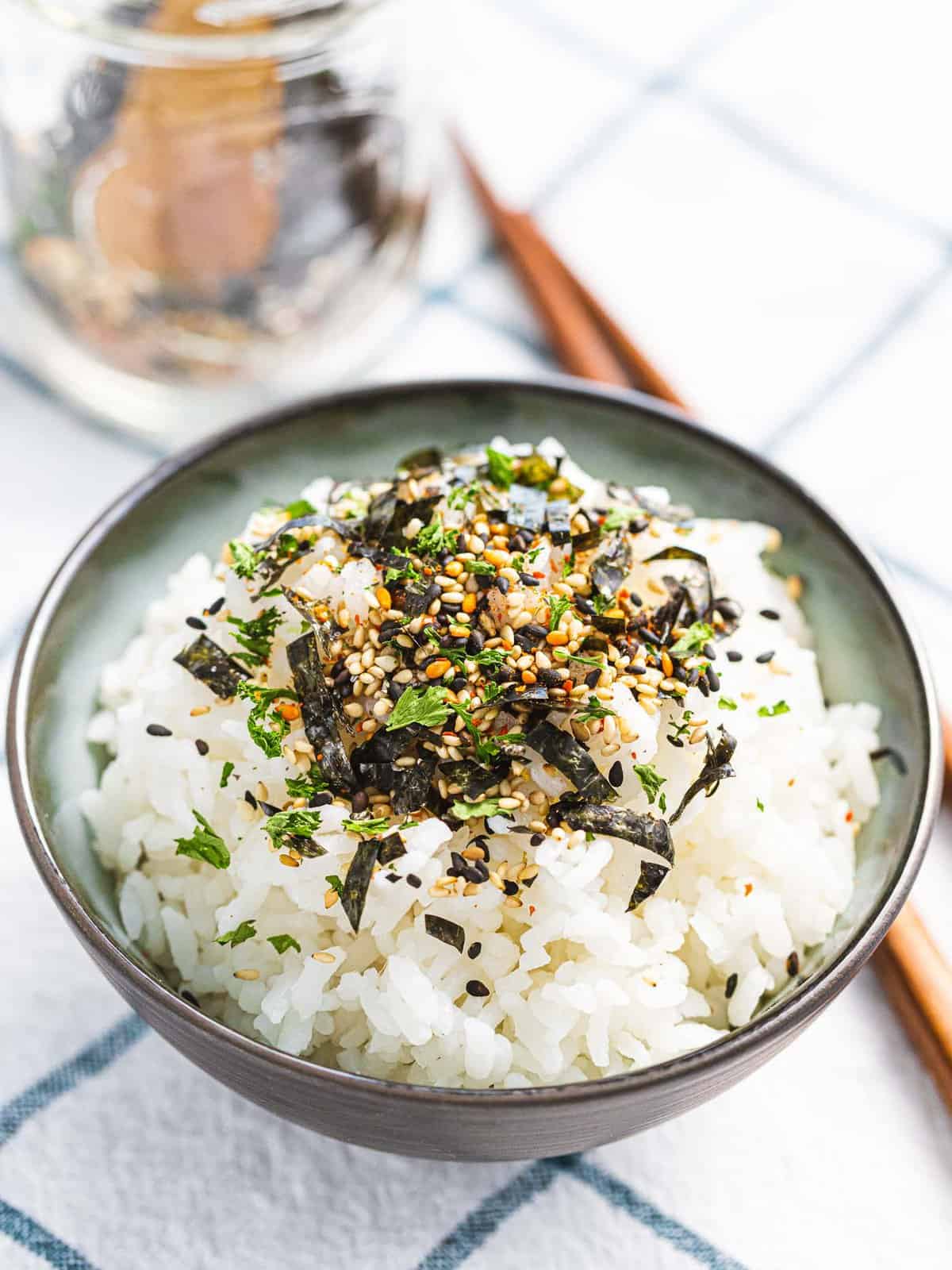
What is furikake?
Furikake is a popular Japanese rice seasoning that can be used as a dry condiment in many dishes, not just rice. It’s typically made of a mixture of nori (dried seaweed), sesame seeds, sugar, and salt. Some form of dried fish is often included, typically bonito flakes, dried shrimp, or freeze-dried salmon.
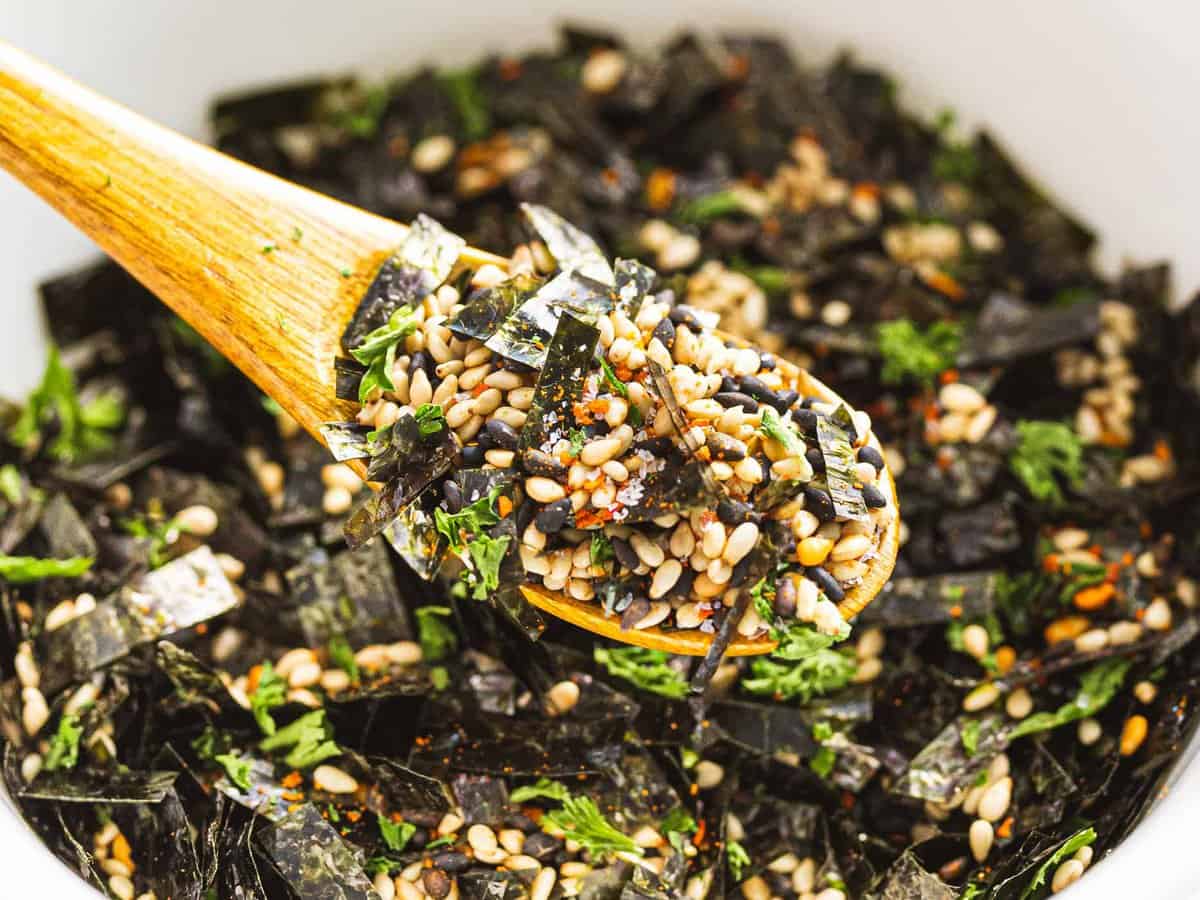
Flavor: Its taste is a combination of sweet and salty with plenty of umami flavor from the nori and nuttiness from the sesame seeds. The texture is delightfully crunchy from the crisp nori pieces and toasted sesame seeds.
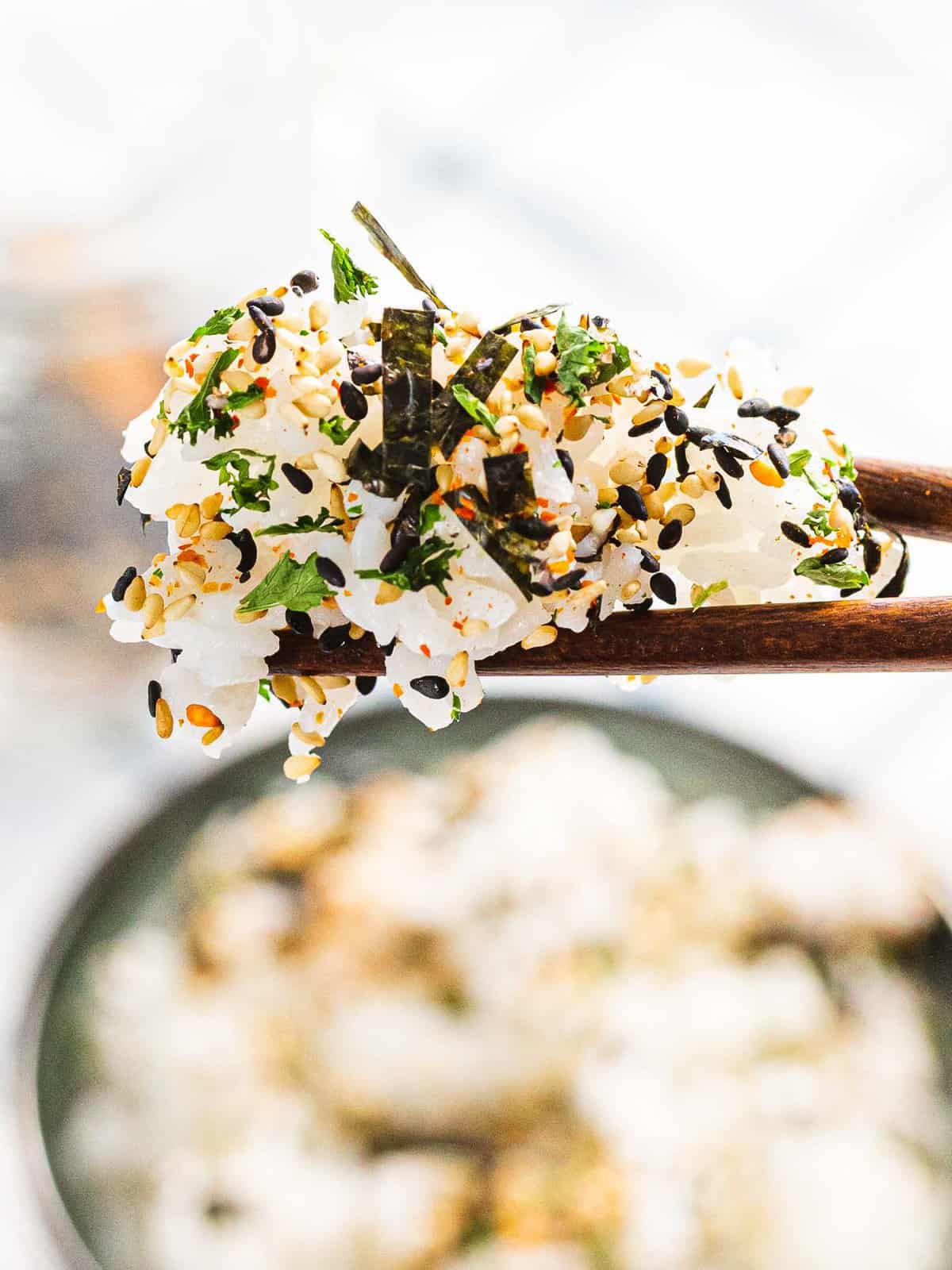
This Japanese rice seasoning is fast, easy, and ready in just 5 minutes! It’s a quick and easy way to add flavor and umami to any meal. Best of all, you can make a big batch of it and store it in the fridge for at least a month!
Furikake Ingredients
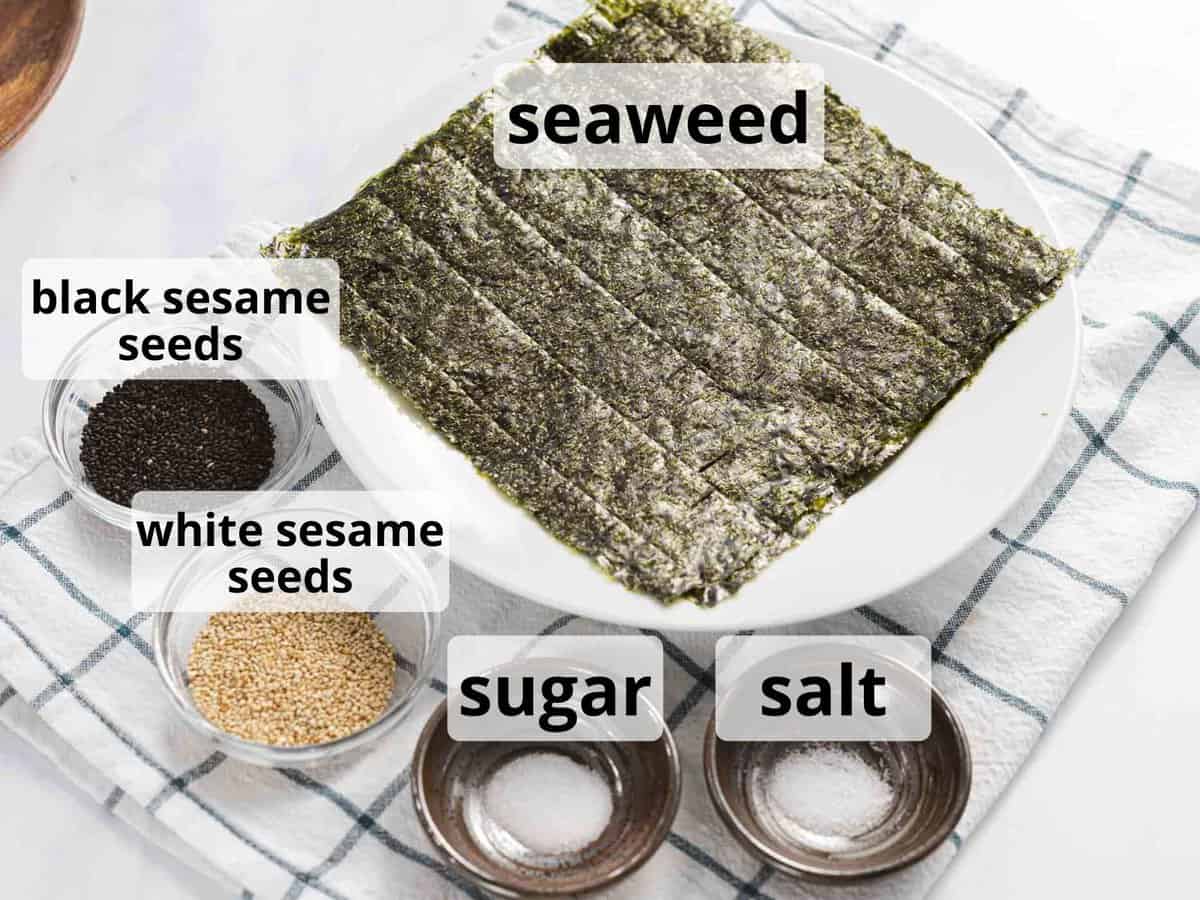
- Nori seaweed – This is made of dried seaweed that’s been processed into a thin sheet. It has a delicious umami flavor that tastes like the ocean and should have no fishy flavor.
- White sesame seeds – Make sure to purchase toasted white sesame seeds to get its full nutty aroma and flavor.
- Black sesame seeds – Make sure to purchase toasted black sesame seeds for the same reasons above. Black sesame seeds add pleasing color contrast with the white sesame seeds but have the same flavor.
- Sugar – Sugar balances out the salt and draws out more of the other flavors.
- Salt – Salt acts to highlight all the flavors of this rice seasoning. Adjust to your liking.
Furikake Flavors
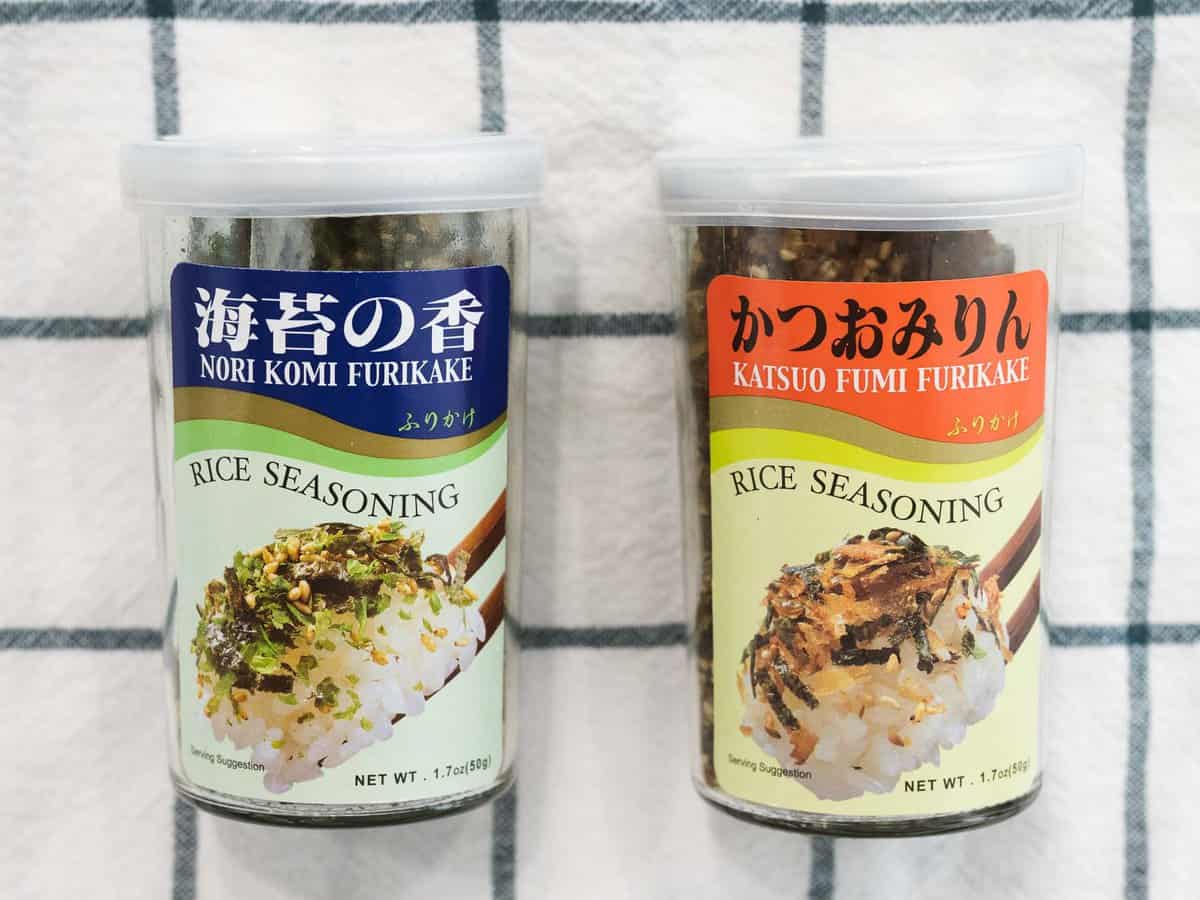
Plenty of flavors exist that can easily be found in Japanese or Asian grocery stores. Here are a few flavors to get ideas from when making this homemade version:
- Nori Komi Furikake – This is the most popular and basic furikake flavor, which is made with thin nori pieces, sesame seeds, salt, and sugar.
- Katsuo Furikake – Another popular flavor, this contains bonito flakes, sugar, and soy sauce which adds tons of umami flavor. It’s definitely a favorite of mine.
- Ebi – Contains crushed dried shrimp for a delicious sweet and savory seafood flavor.
- Noritamago – This version contains dried egg yolks and bonito flakes.
- Shiso – Made with dried red shiso (perilla) leaves. It has a lovely herbal flavor.
- Wasabi – Great for those who are looking for spicy furikake.
How to Make Furikake Seasoning
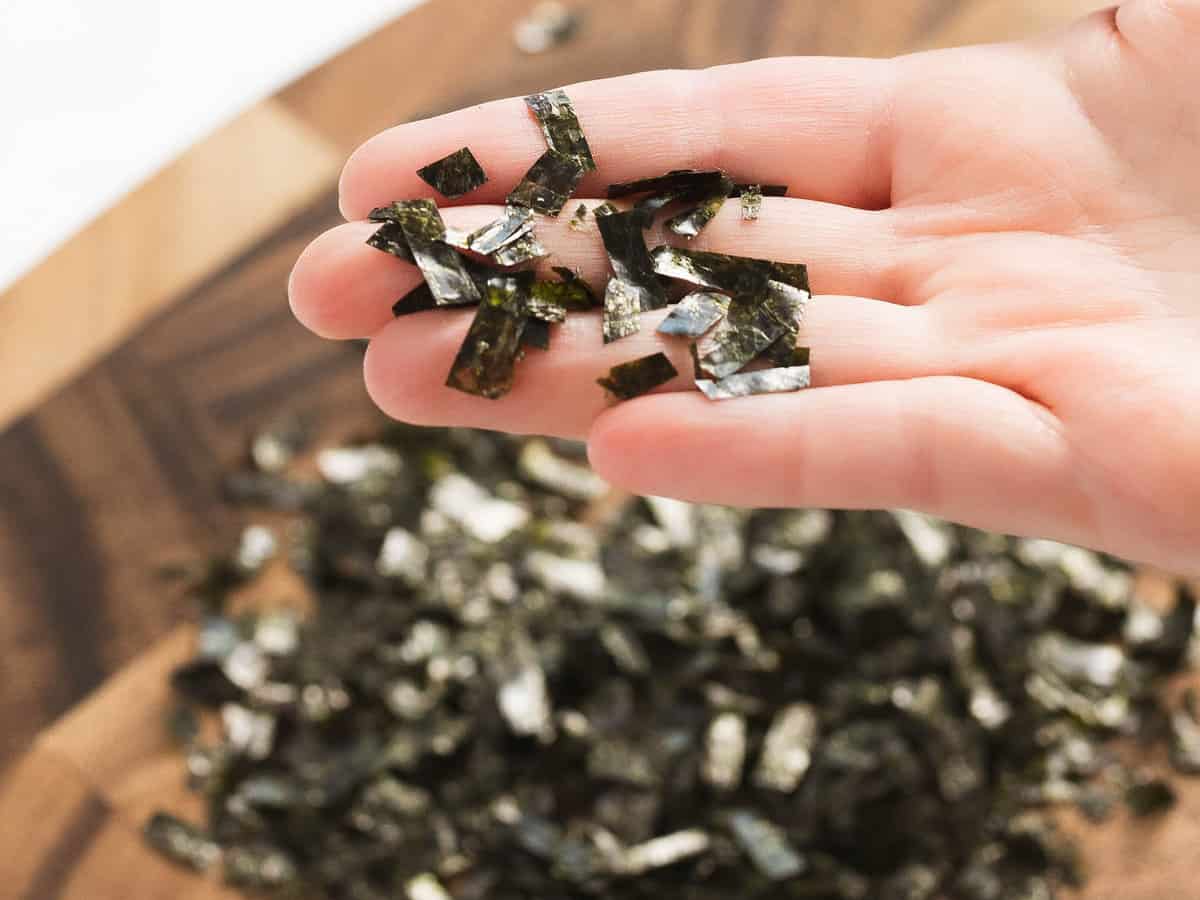
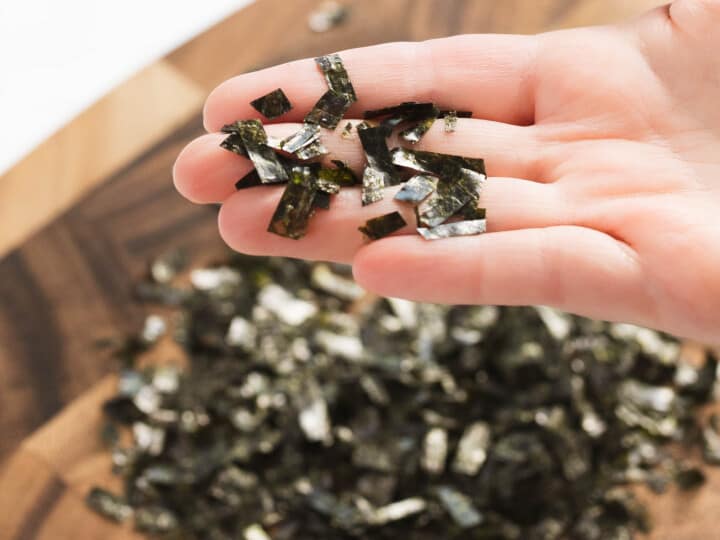
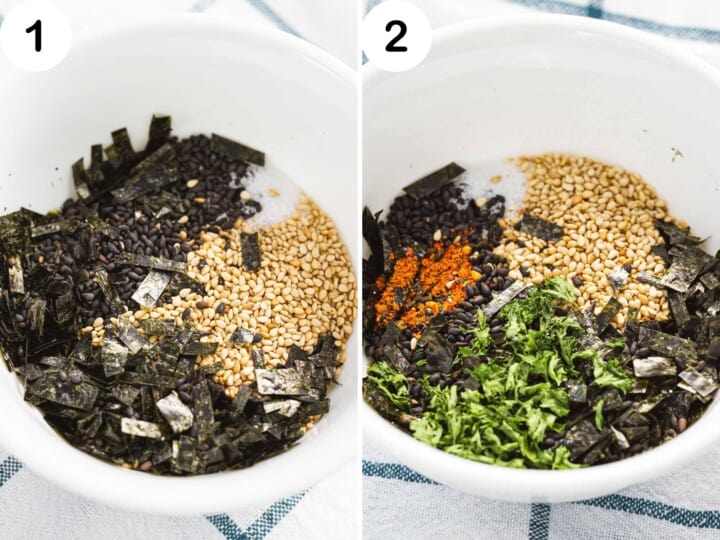
Use your hands, a sharp knife, or kitchen scissors to crumble or cut the nori sheets into small, thin strips or pieces. Add them to a bowl.
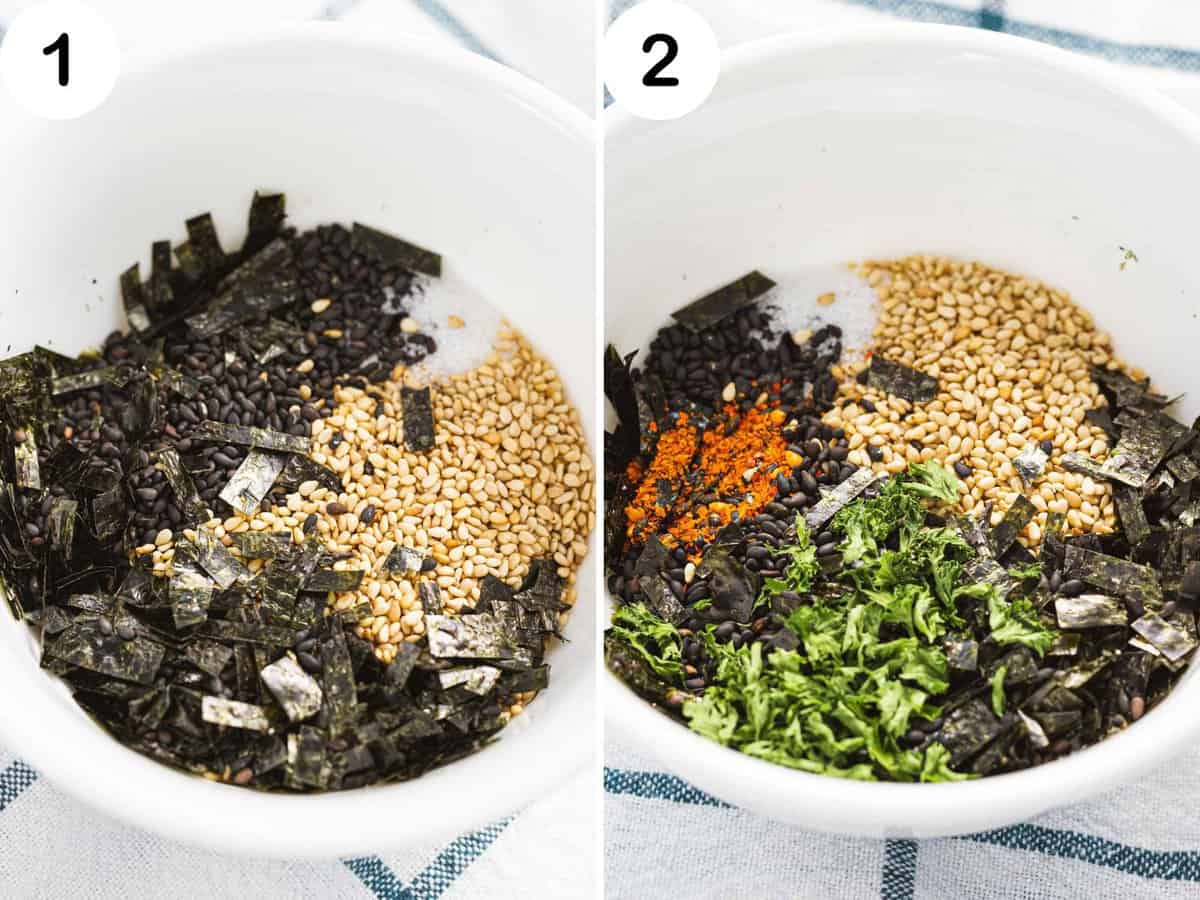
- Add the black and white sesame seeds, salt, and sugar to the nori pieces and mix them together.
- Next, add optional flavorings such as bonito flakes, dried herbs (I used dried parsley), and dried chili pepper such as gochugaru or togarashi. Wasabi powder is another option for spicy furikake. Taste and adjust the salt and sugar to your liking.
Serving Suggestions
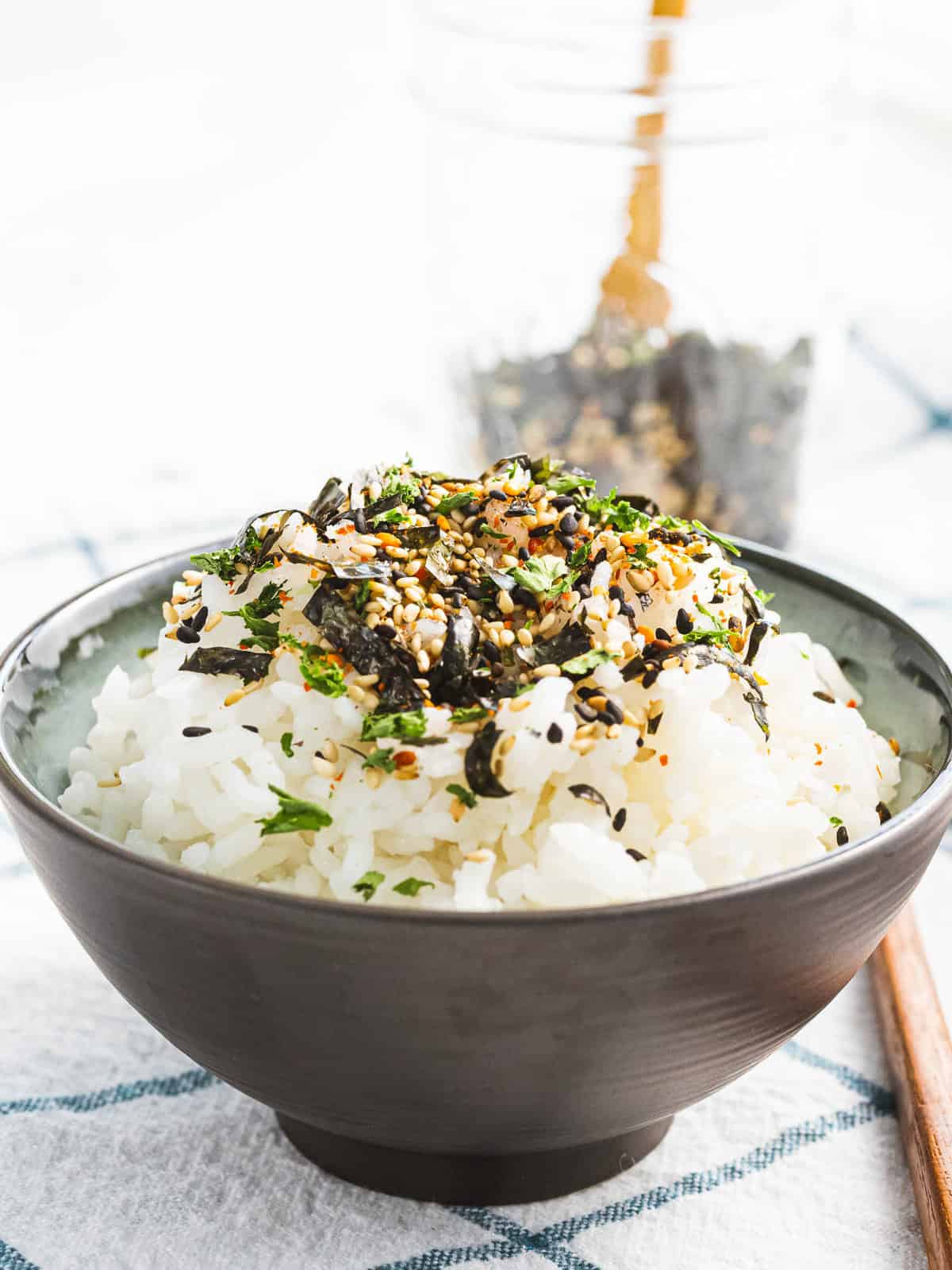
- Mix with a bowl of plain rice to make furikake rice.
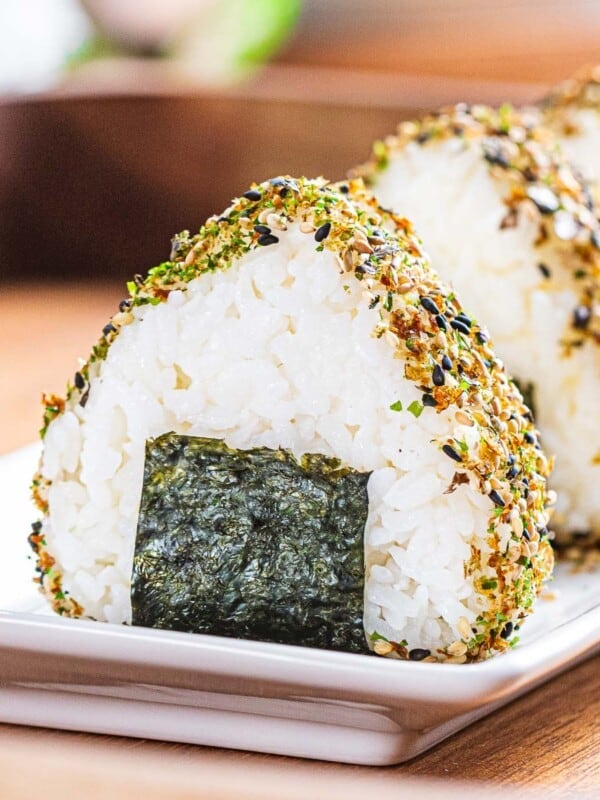
- Make rice balls – Onigiri, yaki onigiri, and Korean rice balls (jumeokbap).
- Sprinkle on udon noodles or ramen noodles.
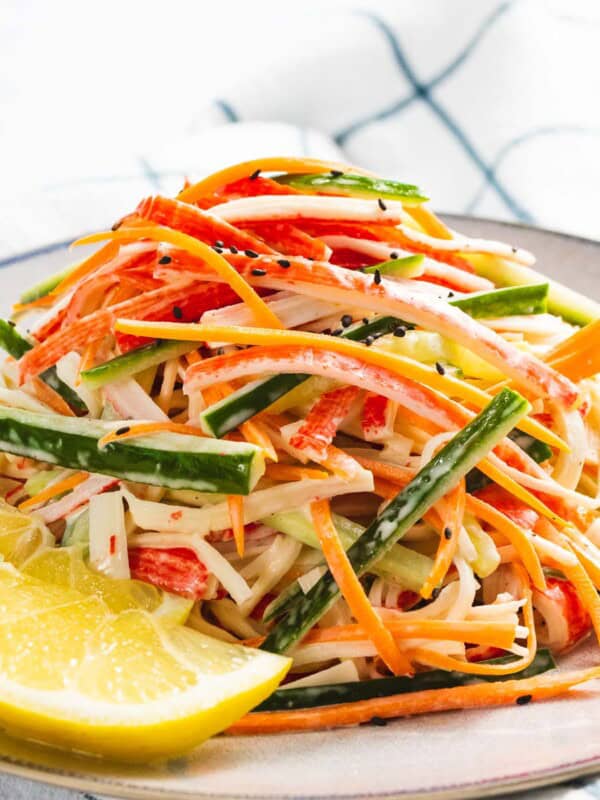
- Entrees – Add to any meal like chicken teriyaki, salmon teriyaki, Asian sea bass, kani salad, or hamburgers.
- French fries or onion rings– Sprinkle a few teaspoons on top right after they come out of the fryer.
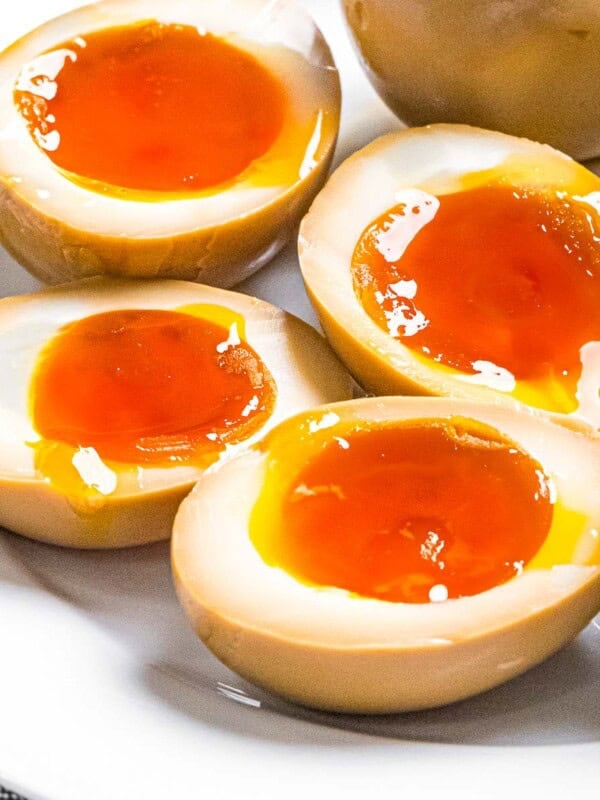
- Snacks – Sprinkle on top of ramen eggs, popcorn, or chex mix.
Storage Tips
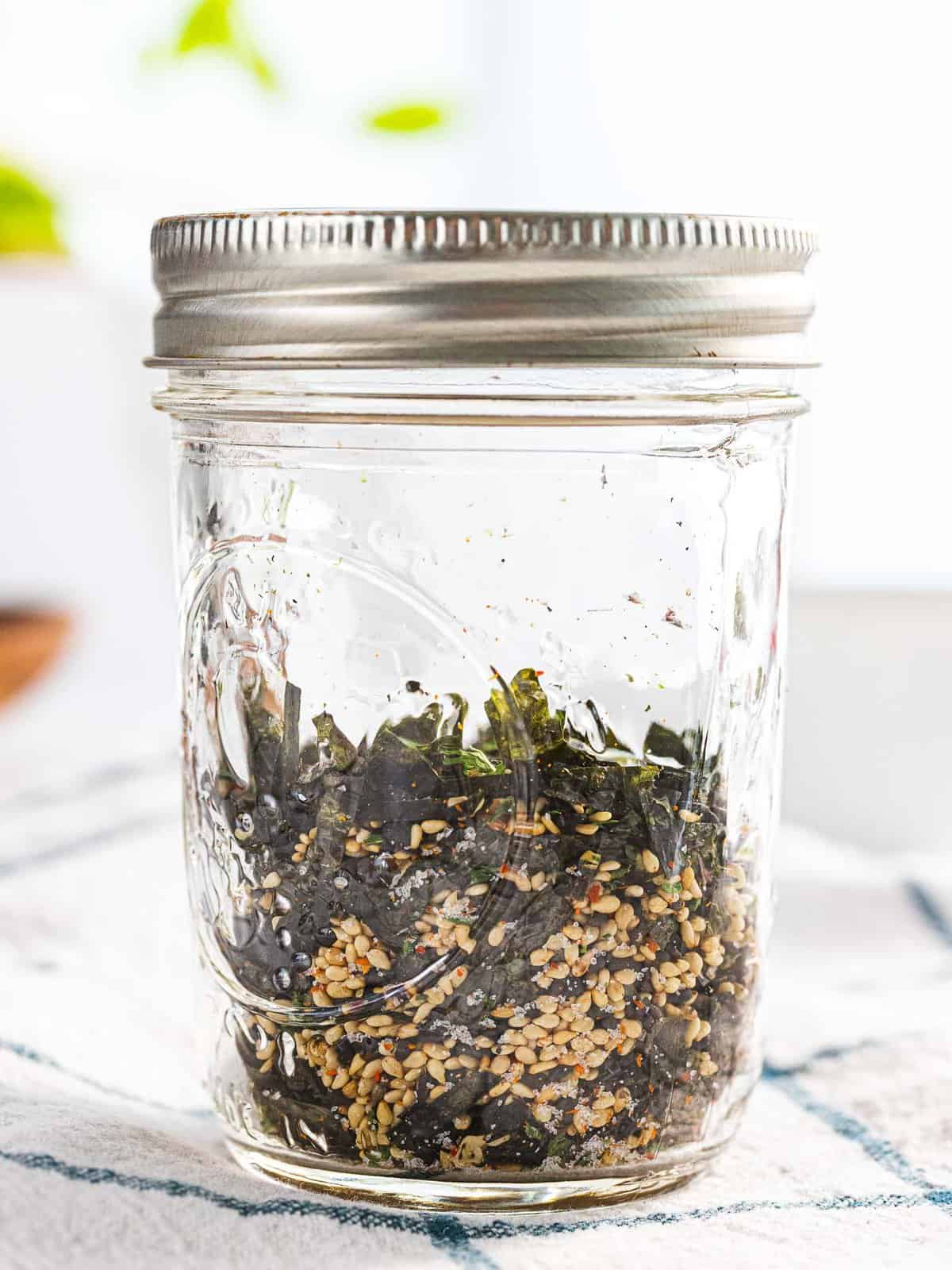
- Store in an airtight container in the fridge to keep the nori crisp. Humidity will make the nori pieces soggy and they will lose their texture.
- Make sure all the ingredients are completely dried before storing. Wet or damp ingredients can shorten the shelf life.
I hope you enjoy this Japanese rice seasoning! Let me know how you like it by leaving a comment and rating. Happy cooking!
More recipes
Furikake (Japanese Rice Seasoning)
Ingredients
- 4 tablespoons toasted white sesame seeds
- 2 tablespoons toasted black sesame seeds
- 2 nori sheets, See Note 1
- 1 teaspoon sugar, or more
- ½ teaspoon sea salt, or more
Optional flavorings
- 1 to 2 tablespoons bonito flakes
- 1 to 2 tablespoons dried shrimp
- 2 to 3 teaspoons dried shiso leaves , or other herbs
- ½ teaspoon ichimi togarashi (Japanese chili peppers), for spice
- ¼ teaspoon wasabi powder, for spice
Instructions
- Cut nori sheets: Using kitchen shears or a knife, cut the nori sheets into small, thin pieces, or crumble them by hand.2 nori sheets

- Mix: Add the nori pieces, white sesame seeds, black sesame seeds, sugar, and salt to a bowl. Mix together.4 tablespoons toasted white sesame seeds, 2 tablespoons toasted black sesame seeds, 1 teaspoon sugar, ½ teaspoon sea salt
- Optional add-ins: Add as many or as few optional add-ins as you'd like and mix them together. Taste and adjust the salt and sugar to your liking.1 to 2 tablespoons bonito flakes, ½ teaspoon ichimi togarashi (Japanese chili peppers), 2 to 3 teaspoons dried shiso leaves
- Serve: Sprinkle a few teaspoons of furikake on rice, ramen, udon noodles, french fries, or any protein like chicken or salmon. Store leftovers in an airtight jar and keep them in the fridge for at least a month. Enjoy!


Notes
- Nori seaweed – This is a thin, flat sheet of seaweed that’s been processed and dried for consumption. A good substitute is seaweed snacks, which are seasoned and roasted seaweed that’s been individually packaged.
Nutrition
Nutrition information is automatically calculated, so should only be used as an approximation.
Like this? Leave a comment below!
The main difference between furikake and togarashi is that furikake is typically not spicy and doesn’t contain chili peppers, unlike togarashi. Furikake is a dry condiment that usually contains dried seaweed (nori), sesame seeds, dried fish (bonito or shrimp), salt, and sugar. While togarashi is also a dry condiment, its primary ingredient is chili pepper so its flavor is quite spicy.









This was a very tasty touch to white rice. Loved the flavors.