
As an Amazon Associate I earn from qualifying purchases. This post may contain affiliate links.

Sweeter and fluffier than butternut, kabocha (Japanese pumpkin, or danhobak in Korean) roasts, blends, fries, and bakes beautifully. Start with my four tested kabocha recipes, then work through eight more favorites from fellow food bloggers.

Kabocha is my all-time favorite winter squash. It’s sweeter than most squash varieties, and roasting turns the flesh soft and fluffy, somewhere between roasted chestnuts and sweet potato. In Korea it’s called danhobak, which means “sweet pumpkin,” and it’s widely loved in both Korea and Japan, where it shows up in savory side dishes, sweet soups, and desserts. It’s also the squash behind the soft pumpkin breads you’ll find in Korean and Japanese bakeries.
That range is why this list mixes savory and sweet. Start with my four tested kabocha recipes: roasted kabocha squash, creamy roasted kabocha squash soup, kabocha squash fries, and soft pumpkin sourdough bread. Then work through eight more from fellow food bloggers, from Filipino squash fritters to kabocha hummus topped with spiced lamb.
Kabocha at a Glance
What it is: A Japanese winter squash, also called Japanese pumpkin or danhobak (Korean for “sweet pumpkin”). It has hard, dark green skin and bright orange flesh.
Why cook with it: It’s sweeter and fluffier than other winter squash once cooked, and the skin is edible after roasting, steaming, or boiling, so there’s no peeling.
Prep time: The only hard part is cutting it. Slice off the stem first, or soften the whole squash in the microwave or oven (steps below).
Make-ahead and storage: A whole, uncut kabocha keeps in a cool, dry spot (not the fridge) for one to three months. Once roasted, it keeps in the fridge for up to 3 days or the freezer for up to 1 month.
Ways to use it: Roast it as a side, blend it into soup, slice it for fries or fritters, stir it into chili or rice, or mash it into bread dough and fillings.
New to kabocha? Jump to how to pick, cut, and store it.
Kabocha Squash Recipes

Roasted Kabocha Squash | Japanese Pumpkin

Roasted Kabocha Squash Soup (Vegan Japanese Pumpkin Soup)

Kabocha Squash Fries

Soft Pumpkin Sourdough Bread

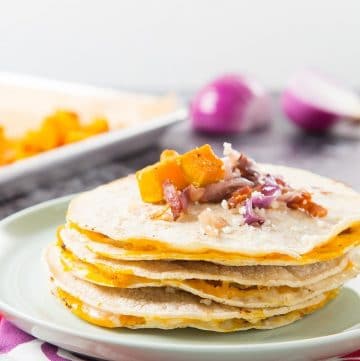
Kabocha Squash and Bacon Mulitas
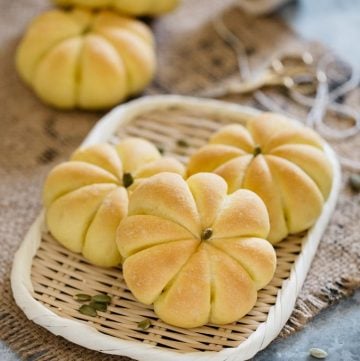
Kabocha Shaped Pumpkin Bread

Kabocha Squash Fritters
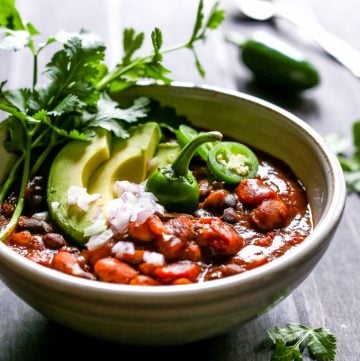
Kabocha Two Bean Chili
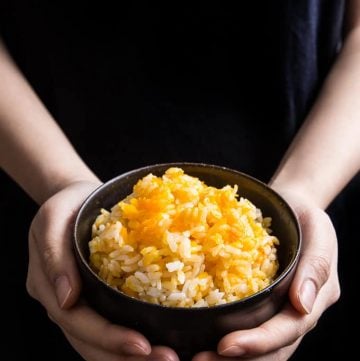
Instant Pot Kabocha Squash Rice
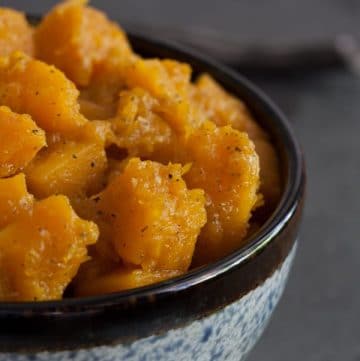
Simple Vietnamese Stewed Squash
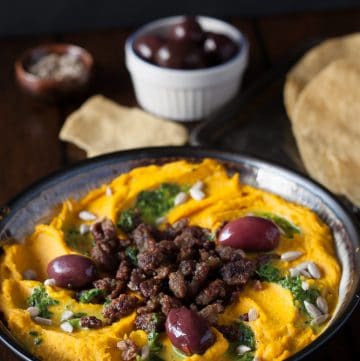
Roasted Kabocha Squash Hummus
How to Pick a Good Kabocha
- Choose one that’s round, with hard, dark green skin.
- It should feel heavy for its size with no soft spots.
- Check the stem for mold.
- A yellow patch, or a few hard, bumpy spots on the skin, are normal and fine to buy.
How to Cut Kabocha Squash
Kabocha skin is hard, so give your knife an easier starting point.
- Wash it. Rinse the squash under running water. Trim off any hard bumps with a knife or peeler, or leave them and remove them after cooking, when the skin has softened.
- Cut off the stem. This exposes the orange flesh, which is much easier to cut into than the skin.
- Halve it. Push the tip of a heavy knife into the flesh and rock it down through the squash. Repeat on the other side to get two halves.
- Too hard? Soften it first. Microwave the whole squash for about 2 minutes, then in 90-second bursts until you can cut it. Or loosely cover it in foil and bake at 375°F for 15 minutes, then let it cool.
- Scoop the seeds. Use a spoon. The seeds are edible, so you can save them for roasting.
- Cut to fit the recipe. Wedges for roasting, 1/4-inch slices for fries, or cubes for boiling and soup.
For the full photo walkthrough, see my roasted kabocha squash post.
How to Store Kabocha
Whole: Keep an uncut kabocha in a cool, dry spot, not the fridge. It will last one to three months, so it’s easy to buy one when you see a good one and cook it later.
Roasted: Refrigerate for up to 3 days, or freeze for up to 1 month. Wrap it in plastic wrap and store it in a zip-top bag or freezer-safe container.
Frequently Asked Questions
Kabocha is sweeter than other winter squash and has a nutty flavor. Cooked, it’s soft and fluffy, similar to roasted chestnuts but softer, like a sweet potato.
Yes. The skin is edible once it’s roasted, steamed, or boiled, so you can leave it on. On kabocha fries it turns thin and crispy. In soup it darkens the color but doesn’t change the flavor.
Cut off the stem first, then push the tip of a heavy knife into the flesh and rock it through. If it’s still too hard, microwave the whole squash for about 2 minutes, then in 90-second bursts, or bake it loosely covered in foil at 375°F for 15 minutes.
Yes. Scoop them out with a spoon and save them for roasting.


So many delicious options in here – I have tried all of them now, and I can honestly say that the family love them all!
So many delicious recipes to try! I have tried a couple of these already, and will be back to try the rest soon! Saving!!
Thanks for giving them a try Hanna! 🙂
All these recipes sound amazing! I’m going to be on the lookout for kabocha next time I go shopping.
This list of recipes look incredibly delicious. Thanks for taking time to compile this.
Wow, so many great recipes in this round-up. And perfect timing too, can’t wait to make those fries and that soup! Fab round-up thanks for sharing it.
These all look so incredible – I definitely have to try those fries! Great collection of recipes.
Thank you for this! They all look great and perfect for the colder months!
All of these kabocha squash recipes sounds incredible! Can’t wait to try some